
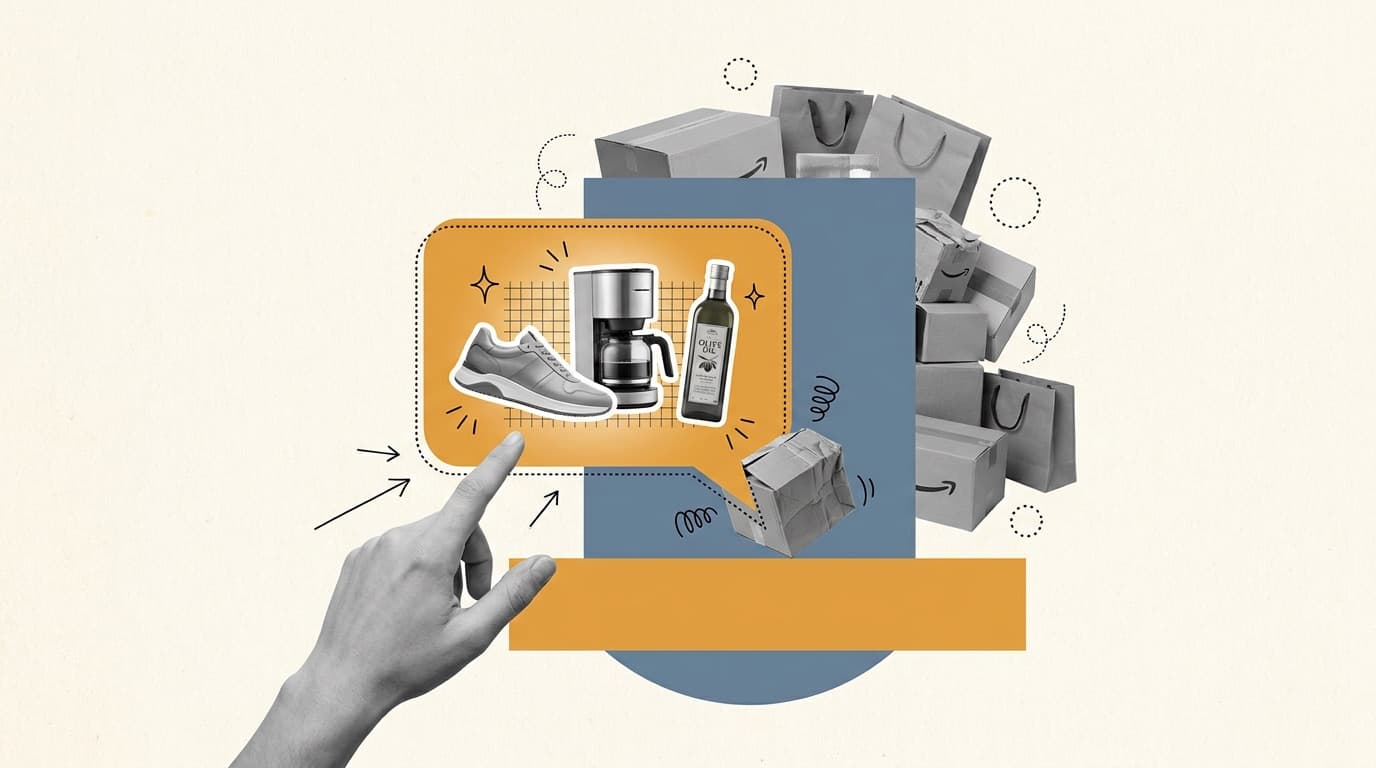
E-commerce brands are used to optimizing for two surfaces: Google's organic results and Google Shopping ads. ChatGPT Shopping introduced a third surface that behaves like neither of the first two. There's no paid placement to buy. There's no clear ranking dashboard. And the recommendation set is small, often three or four products surfaced as cards inside an answer. Understanding how that surface works is no longer optional.
How ChatGPT Shopping actually works
When a user asks a product-shaped question, ChatGPT can return rich product cards alongside its text response. Each card includes a product image, price, star rating, and a direct link to purchase. The data feeding those cards comes from a combination of merchant feeds, structured data on product pages, review platforms, and the web content ChatGPT already indexes.
Two patterns hold consistently. For specific product queries like 'MacBook Air,' the brand's own product page is favored. For general queries like 'best laptop for college,' marketplaces and review sites are favored. The implication is clear: your strategy needs to win both surfaces.
The buying intent shift
58% of consumers have already replaced traditional search engines with AI tools for product and service discovery, according to Capgemini's 2025 research. 64% of customers say they're ready to purchase products recommended by AI. Three in four Americans now search with AI weekly.
These aren't future projections. They're current behavior. For e-commerce brands, the question isn't whether AI will become a discovery channel. It's whether your products show up when it does.
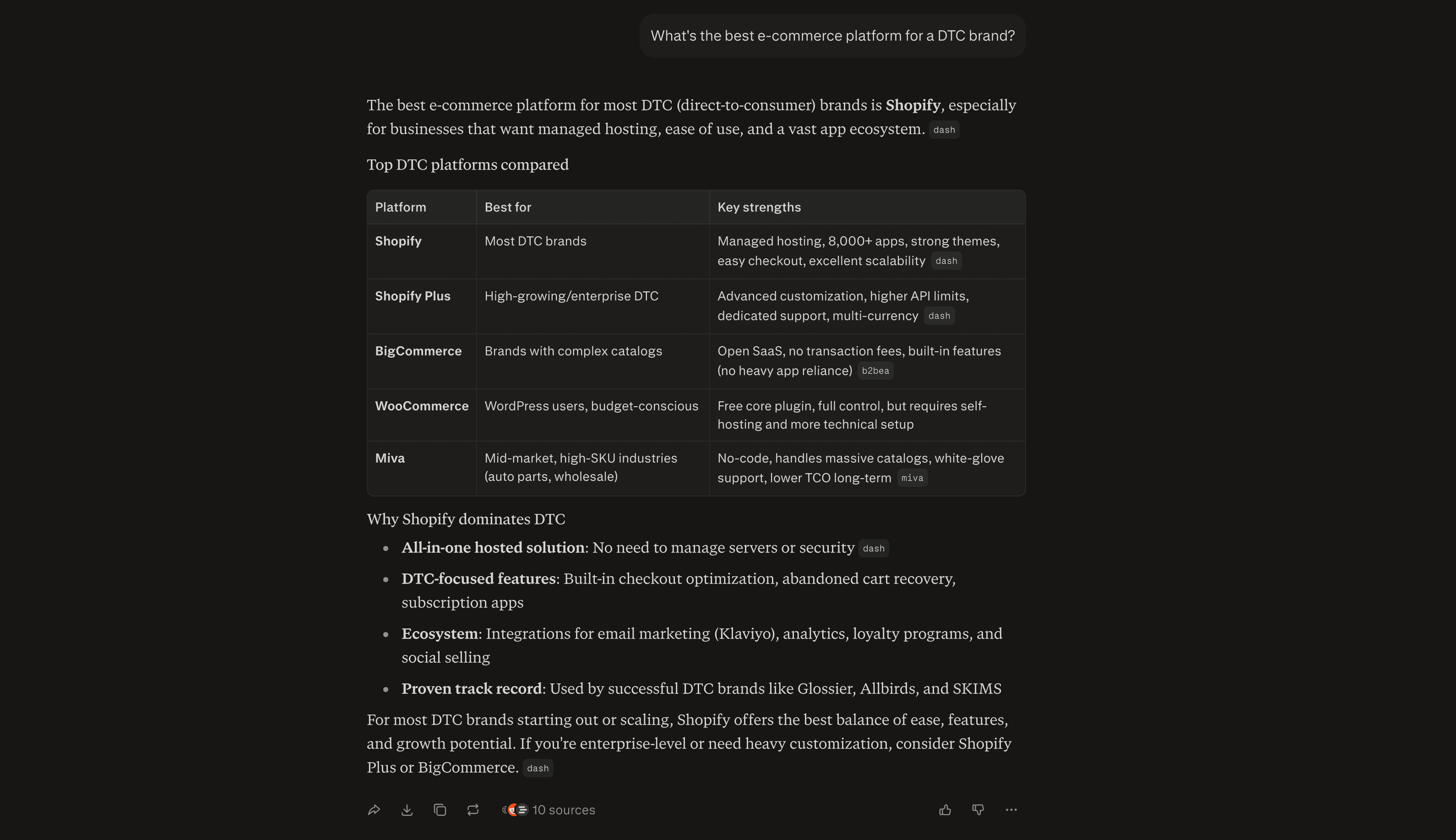
What earns product card placement
Five factors stand out in current research and observed behavior.
- Complete, accurate structured data on product pages, including Product, Offer, AggregateRating, and Review schema
- Active merchant feed presence in Google Merchant Center and equivalent feeds, which ChatGPT pulls from
- Substantial review presence on Trustpilot, Sitejabber, and category-specific review platforms
- Inclusion in editorial roundups and 'best of' content on publications your buyers trust
- Fast-loading product pages with FCP under 0.4 seconds, which see 3x higher citation rates than slow pages
What doesn't matter much is the same thing that didn't matter much for traditional search rankings in the late 2010s: keyword stuffing, generic SEO copy, and aggressive on-page optimization without third-party support.
Why reviews carry disproportionate weight in e-commerce
For physical products, AI models face a verification problem. They can't touch the product. They can't measure quality. They rely heavily on aggregated user sentiment from sources they trust. Trustpilot, Sitejabber, and category-specific review platforms become primary evidence.
Brands with active review profiles on these platforms are 3x more likely to be cited by ChatGPT. For Perplexity, reviews weight around 31% of the recommendation signal. The implication for e-commerce teams is operational: a sustainable, lifecycle-integrated review-request practice is one of the highest-leverage AI visibility investments available.
The structured data question
Schema markup was historically a Google concern. In an AI-first world, it's a citation-cleanliness concern. AI models extracting product information prefer clean, machine-readable structured data over inferring details from page copy.

Want to get recommended by AI?
Check your AI search visibility, then let the Honeyb agent write, fix, and earn what gets you recommended. Free to start.
The high-priority schemas for e-commerce product pages are Product (with brand, name, description, image), Offer (price, currency, availability, priceValidUntil), AggregateRating (averageRating, reviewCount), and Review (where applicable). Missing or incorrect schema doesn't prevent citation, but it makes accurate citation less likely. The broader question is covered in does schema markup help with AI visibility.
The marketplace versus DTC tension
For brands sold on both their own site and on marketplaces like Amazon, there's a recurring question: should we invest in our DTC site's AI visibility, or rely on marketplace placement?
The honest answer is both, with different objectives. Marketplace presence helps for general 'best X' queries where AI models prefer marketplaces. DTC site optimization helps for specific brand queries and for the long-term ability to control the narrative AI models construct about your brand. Skipping either surface concedes ground.
What changes in 2026
Three shifts are worth tracking actively.
- Multimodal product search is maturing. Users uploading photos and asking 'find me something like this' is a growing query pattern, and AI models are increasingly able to match visual properties to product catalogs.
- Conversational refinement is replacing filtered search. Buyers ask follow-up questions like 'show me one under $80' rather than re-filtering a results page. Your product data needs to support this granularity.
- Cross-model divergence is widening. ChatGPT, Perplexity, Gemini, and Claude each surface different product sets for the same query, and the gap is growing. Optimizing for one is no longer a proxy for the others.
For more on the underlying mechanics of AI product discovery, see our deeper piece on ChatGPT Shopping brand strategy.
A practical e-commerce playbook
In any 90-day window, the moves with the most leverage for an e-commerce brand look roughly like this.
- Audit structured data across all product pages. Fix missing or incorrect schema.
- Verify your Google Merchant Center feed is healthy and complete. ChatGPT Shopping pulls from these signals.
- Set up or refresh review-request flows tied to post-purchase milestones. Aim for review velocity, not just volume.
- Identify the editorial roundups your buyers cite most. Pursue inclusion through substantive PR outreach, not link-building tactics.
- Measure weekly across multiple AI models. Track product-level visibility, not just brand-level.
Closing thought
ChatGPT Shopping isn't a future trend. It's a current discovery channel that already influences purchase decisions for tens of millions of buyers. The brands treating it as a dedicated surface, with measurement and ongoing optimization, will own the small recommendation set. The ones that don't will watch competitors take the slots. Run a free visibility check on your top-selling product categories to see where you currently surface, then work back from there.
OpenAI has since added a paid layer to that channel, and what OpenAI's move into advertising means for brands explains how a competitor can now buy a sponsored slot beneath an answer that recommends you, which is one more reason to widen your earned lead in the recommendation set itself.