
Yes, ChatGPT cites sources when it searches the web. In our 13 July 2026 measurement at Honeyb (our own AI visibility tracker), the ChatGPT API returned sources on 100% of 60 answers, averaging 15.0 sources per answer. That is the highest of the four engines we tested. Two caveats matter. The consumer app often hides those citations, and the cited set is a long tail: the top three domains covered just 7.6% of ChatGPT's 900 citations. So the accurate answer is yes via the API, sometimes in the app, and rarely from the handful of sites you might expect.
How we measured it
We ran 20 buyer-intent prompts, three identical runs each, across four engines via their APIs: ChatGPT (gpt-5-mini), Gemini (gemini-2.5-flash), Claude (claude-haiku-4-5) and Perplexity (sonar). That produced 240 answers. Every engine returned sources on 100% of its answers.
One caveat before the numbers: this was via API, where sources arrive as structured data. Consumer apps may show fewer or none, and ChatGPT and Gemini in particular often hide citations from users, while Perplexity and Claude expose theirs. This post covers what the citations look like once you can see them. For whether ChatGPT searches the web at all, and when, see can ChatGPT search the internet.
| Engine | Avg sources per answer | Total citations | Distinct domains | Citation behaviour |
|---|---|---|---|---|
| ChatGPT (gpt-5-mini) | 15.0 | 900 | 445 | Long tail, top 3 domains only 7.6% |
| Gemini (gemini-2.5-flash) | 10.7 | 580 | 109 | 74% of URLs masked by grounding redirects |
| Claude (claude-haiku-4-5) | 8.8 | 529 | 194 | Open mid-size spread, top 3 domains 6% |
| Perplexity (sonar) | 8.3 | 498 | 142 | Concentrated: Reddit 14%, YouTube 8% |
ChatGPT is comfortably the heaviest citer of the four.
Sources per answer
Average sources cited per answer, by engine
| Item | Sources per answer |
|---|---|
| ChatGPT | 15 |
| Gemini | 10.7 |
| Claude | 8.8 |
| Perplexity | 8.3 |
ChatGPT's citations are a long tail
Across 60 answers, ChatGPT produced 900 citations from 445 distinct domains. The top three domains accounted for just 7.6% of the total. Forbes led with 40 citations, which is 4.4% of everything ChatGPT cited. The next tier, toolradar.com and cybernews.com, managed 14 each.
No single publisher owns ChatGPT's answers. That cuts both ways for brands. Your odds of appearing somewhere in the cited set are real even without a marquee placement. But no single placement, Forbes included, buys you consistent presence. Forbes was the only domain to appear in all four engines' top-cited lists, and even there it never passed 4.4% of any engine's citations in our data.
How the other three engines handle sources
Perplexity is the opposite of ChatGPT: fewer, more concentrated citations. Of its 498 citations from 142 domains, Reddit took 71 (14%) and YouTube 40 (8%). That mirrors Semrush's wider June 2025 study of about 150,000 AI citations, in which Reddit was the most-cited domain. Perplexity also exposes its sources prominently in the consumer product, which makes it the easiest engine to audit by hand.
Gemini technically cited sources on every answer (it completed 54 of the 60 runs), but wrapped 429 of its 580 source URLs (74%) in vertexaisearch.cloud.google.com grounding redirects that mask the real destination. You can see that Gemini used sources. You often cannot see which ones without resolving each redirect.

Want to get recommended by AI?
Check your AI search visibility, then let the Honeyb agent write, fix, and earn what gets you recommended. Free to start.
Claude sits in the middle: 529 citations from 194 domains, with the top three domains at just 6%. Like ChatGPT, it spreads citations widely, and like Perplexity, it exposes them to users.
How to see ChatGPT's sources
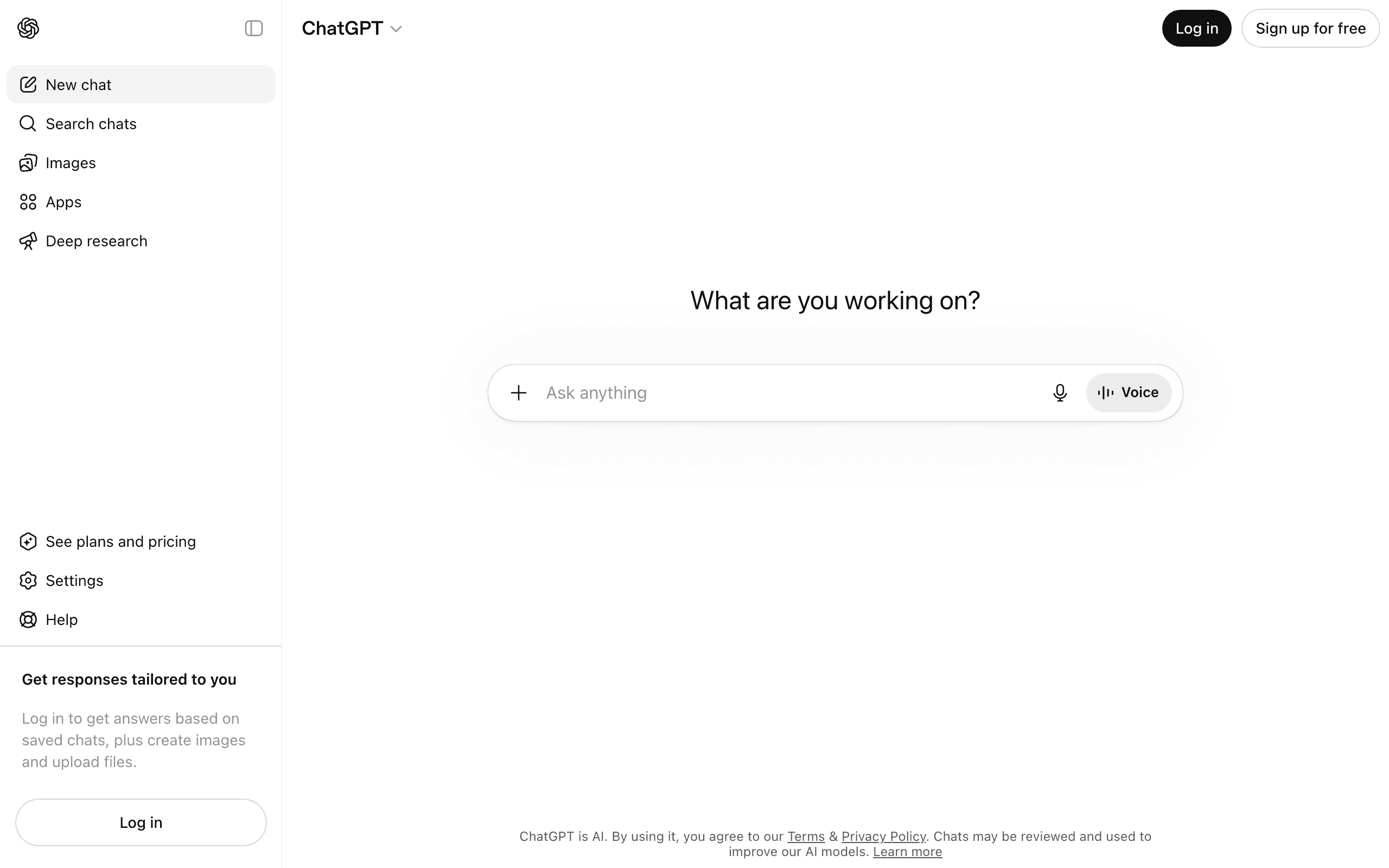
In the consumer app, sources only exist when ChatGPT actually searches. Three practical steps:
1. Ask a question that triggers search, or toggle the search option on before asking. 2. Look for inline link chips in the answer and the sources list at the end. 3. If no links appear, ask it directly to search the web and list its sources with links.
Answers produced without a search come from training data. Those can include plausible-looking references that do not exist, which is where ChatGPT's reputation for making up sources comes from. The fix is simple: treat any reference without a clickable link as unverified.
Via the API with web search enabled, sources arrive as structured annotations on every answer. That is how we collected all 900 of ChatGPT's citations. Teams that would rather not build that collection can use an AI mentions API, which returns the same record per answer: whether the brand was named, where, and every page the engine cited, at $0.08 per answer.
How to find out if ChatGPT cites your site
The manual route: ask the buying-intent questions your customers ask, open the sources, look for your domain. It works once, but it does not generalise. SparkToro found less than a 1-in-100 chance that two runs of the same prompt return the same list of brands, so one clean check tells you almost nothing about the next answer. We covered the maths of that problem in why spot-checking AI answers fails.
Two more reasons a single check misleads. Semrush found 62% of AI citations never name the brand, so you can be cited without being recommended, or recommended off the back of pages you have never seen. And what drives citations is largely off your site: Ahrefs found AI visibility correlates most with third-party mentions and video, not on-page work. If you are starting from zero, what is AI visibility and how to get cited by AI cover the fundamentals.
Honeyb, our product, automates the tracking side: it runs your category's buyer prompts across ChatGPT, Gemini, Claude and Perplexity on a schedule and records every cited domain, so you see whether yours appears and how that changes over time. Start with a free AI visibility check to see whether ChatGPT and the other engines cite your site today.