

AEO stands for answer engine optimization: the practice of getting your brand named and cited inside AI-generated answers rather than only ranked in a list of blue links. In marketing the term covers that same goal across ChatGPT, Google AI Overviews and AI Mode, Perplexity, Gemini and Claude. The work divides into four tactics, set out below, and one measurement problem that makes most reported AEO results unreliable.
In March 2025, Pew Research Center watched what 900 US adults actually did on Google. When an AI summary sat at the top of the results, people clicked through to a website on just 8% of those visits. Without a summary, they clicked 15% of the time. Clicks on the sources cited inside the summary happened on 1% of visits. That single gap, 8 versus 15, is the entire reason answer engine optimization exists. The click you used to compete for is disappearing, and the new prize is being the brand the answer is built from. This guide defines AEO precisely, separates it from SEO and generative engine optimization, walks through the tactics the research actually supports, explains what changed when Google retired FAQ rich results in May 2026, and shows how to measure results when there is often no click to count.
AEO meaning: what answer engine optimization actually is
Answer engine optimization, usually shortened to AEO, is the practice of structuring and writing content so an AI-powered answer engine can extract a direct, accurate answer from it and attribute that answer to your brand. An answer engine is any system that returns a composed response instead of a ranked list of links: Google AI Overviews and AI Mode, ChatGPT, Perplexity, Gemini, Microsoft Copilot, and the voice assistants that read a single answer aloud all qualify.
The defining shift is the unit of success. Classic search optimises for a ranking position that earns a click. AEO optimises for inclusion in the answer itself, whether or not a click follows. That distinction is not academic. The Pew data above shows the click is no longer the reliable outcome, and the same study found people were more likely to end their session entirely after a page with an AI summary, on 26% of such pages versus 16% of pages with only standard results. The reference to your brand inside the answer is increasingly the result, not the click. (Pew Research Center, July 2025)
Because the answer is the product, AEO rewards content that is easy to lift verbatim and easy to trust: a clear question, a self-contained answer in the next sentence or two, and the supporting evidence sitting right beside it. If a model has to reconstruct your point from scattered prose, it will reach for a source that did the work already, a principle we walk through in the full answer engine optimization guide.
AEO versus SEO versus GEO
These three terms overlap heavily and the boundaries are genuinely contested, so it helps to define them by what they optimise for rather than by which tactics they share. SEO targets a ranking position in a list of links. AEO targets selection as the extracted answer, in featured snippets, People Also Ask and the answers voice assistants read out. GEO, generative engine optimization, targets being cited and favourably described inside the longer synthesised narrative a large language model produces.
The cleanest mental model: AEO is concerned with whether you are the answer, GEO is concerned with how you are framed within an answer that draws on many sources, and SEO underpins both by making your content discoverable and crawlable in the first place. In day-to-day work the tactics converge. What separates the three is the metric you are trying to move.
| Dimension | SEO | AEO | GEO |
|---|---|---|---|
| Primary target | Ranking position in a list | Selection as the direct answer | Citation and framing inside a generated answer |
| Typical surface | Blue links, featured snippets | Featured snippets, PAA, voice answers | ChatGPT, Perplexity, Gemini, Claude |
| Unit of success | Click-through | Answer inclusion | Mention, citation, share of voice |
| Content shape | Keyword-relevant pages | Concise question and answer pairs | Authoritative, well-cited, entity-rich content |
| Core measurement | Rankings and organic traffic | Snippet capture and answer presence | Citation frequency, sentiment, competitor benchmarking |
For a deeper treatment of the generative side, see our guide to what generative engine optimization is. The two disciplines are converging fast, but the measurement gap is what keeps them distinct in practice.
Monthly searches (US)
Search demand for AI optimisation terms (US)
The chart shows that search interest in these terms, including answer engine optimization and AI search optimization, has grown together rather than one cannibalising the others. They are facets of the same underlying change in how people retrieve information, and a sensible programme treats them as one effort with three reporting lenses.
What the research actually says works
The most cited primary research here is the GEO paper from Aggarwal and colleagues at Princeton, Georgia Tech, the Allen Institute for AI and IIT Delhi, accepted to KDD 2024. The authors built GEO-bench, a benchmark of roughly 10,000 queries across domains, and tested which content changes increased a source's visibility inside generative engine responses. Their headline result is that the best methods lifted visibility by up to 40% on a position-adjusted word count metric, which credits a source both for being mentioned and for being mentioned prominently and early. (Aggarwal et al., arXiv:2311.09735)
The instructive part is which changes helped. The three top-performing tactics were citing credible sources, adding direct quotations, and adding concrete statistics. Each consistently improved how often and how prominently a source was surfaced, and the effect varied sensibly by domain: statistics addition was strongest for law, government and opinion questions, while quotation addition led in people, society and explanatory queries. Tactics inherited from old-school SEO, such as keyword stuffing, showed little to no improvement and at times underperformed the baseline. The lesson maps cleanly onto the AEO mindset. Answer engines reward content that reads like a trustworthy, evidence-backed answer, not content gamed for a crawler.
Tactic one: write content shaped like the answer
Answer engines extract best from content that already looks like an answer. Lead with the question phrased the way a real person would ask it, then give a direct, self-contained answer in the first sentence or two before expanding. A reader, or a model, that lands mid-page should be able to lift one paragraph and have a complete, accurate response without the surrounding context.
In practice this favours short declarative sentences, descriptive headings phrased as questions, and answer blocks that stand alone. Tables and tight bulleted lists extract cleanly because the relationships in them are explicit rather than implied. There is hard leverage here: pages previously selected for featured snippets are cited in Google AI Overviews at roughly twice the rate of non-snippet pages. The snippet-shaped paragraph is the single most portable unit of AEO. The free People Also Ask tool is a fast way to find the exact phrasings worth answering for a topic. (digitalapplied.com, 2026)
Tactic two: structured data, after the FAQ reset
Answer engines parse pages more reliably when meaning is declared explicitly rather than inferred, and Schema.org is the standard vocabulary for declaring it. But the obvious move of the last few years, bolting FAQPage schema onto every page, no longer pays the dividend it used to. On 7 May 2026 Google stopped showing FAQ rich results in search entirely, completing a phase-out it began in August 2023, and it is removing the related Search Console reports through 2026. Google still parses FAQPage markup and says leaving it in place causes no harm, but it produces no rich result and should not be treated as a growth lever in itself. (Search Engine Journal, 2026)
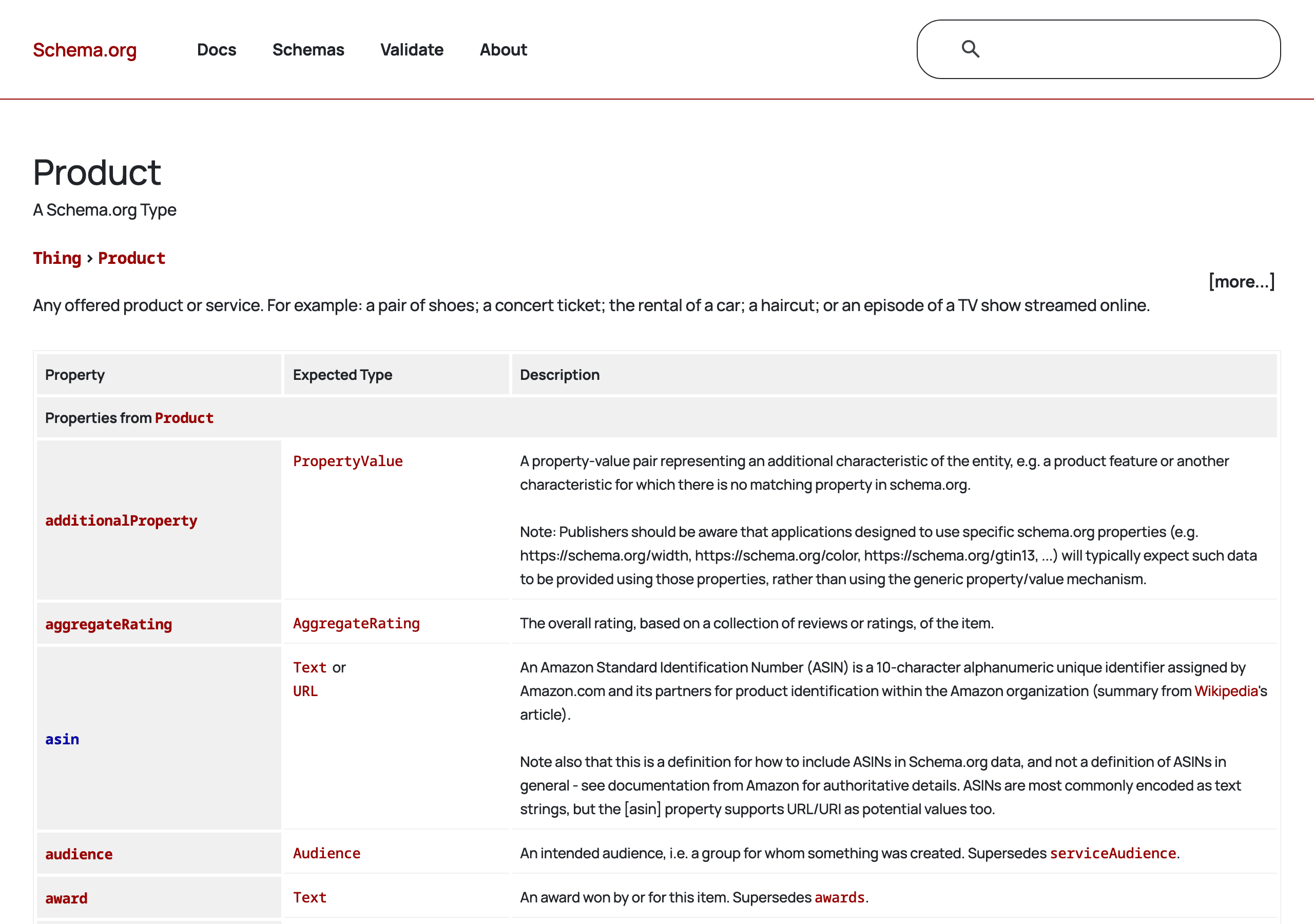
The schema types that still earn their keep are the entity-defining ones: Article, Product, Organization and Person. These pin down who you are, what category you sit in and what you sell, which is exactly what an engine needs to attribute an answer to the right brand. We cover the practical implementation in schema markup for AI visibility. The principle survives the FAQ change intact: state every fact you want an engine to repeat in plain prose, and reinforce the entities behind it with structured data. The FAQ-on-the-page itself still helps, just for the words it contains, not for the markup wrapped around them.

Want to get recommended by AI?
Check your AI search visibility, then let the Honeyb agent write, fix, and earn what gets you recommended. Free to start.
Tactic three: entity clarity and consistency
Answer engines work with entities, the distinct people, products, organisations and concepts a model recognises, not with raw strings of text. If a model is unsure what your brand is, which category it belongs to, or what it does, it will not confidently name you. Entity clarity means describing your brand the same way everywhere: one consistent name, a one-line category description, and the same core attributes across your site, your profiles and the third-party references an engine reads.
This is where off-site signals decide the outcome. The sources an engine already trusts, including review platforms and community discussions, shape how it understands and frames a brand long before it reaches your homepage. Our analysis of how AI models choose which brands to recommend goes into which signals carry the most weight and why a consistent entity footprint beats a clever on-page tweak.
Tactic four: citations, evidence and freshness
The GEO research is unambiguous that evidence wins. Pages that cite credible sources, quote them directly and include specific figures are surfaced more often than pages that assert claims without support. The practical move is to back every meaningful claim with a primary source and a date, and to attribute statistics to their origin rather than to a secondary blog that paraphrased them.
Freshness is the companion signal. Answer engines favour current information, especially for topics where the answer moves over time, so dating your content, refreshing figures and revisiting pages on a schedule all help. The landscape itself proves the point: First Page Sage's running tracker puts ChatGPT at just over half of AI chatbot market share in 2026, with Claude having climbed sharply over the prior year to displace Gemini as the clearest challenger, a distribution that looked nothing like the one a year earlier. A page that quoted 2024 market shares as current would now be a weaker citation candidate than a maintained equivalent. We keep a running view in our AI chatbot market share breakdown. (First Page Sage, 2026)
How to measure AEO
Measurement is where AEO departs hardest from SEO, because the win is usually a citation with no click attached. Rank trackers and session analytics will under-report or miss the value entirely. The metrics that matter are presence and framing inside the answers themselves.
- Answer inclusion rate: how often your brand appears in answers to the questions you care about
- Citation frequency: how often an engine links your pages as a source
- Share of voice: how often you appear versus named competitors for the same prompts
- Sentiment: whether you are described positively, neutrally or with caveats
- Coverage: across which engines, and across which buyer questions, you appear
A one-off spot check cannot produce these reliably. Answer engines are non-deterministic, so the same prompt yields different responses on different days, and a single manual look gives a snapshot that may not hold tomorrow. The robust approach is scheduled scanning across a fixed set of prompts and engines, which turns noisy individual answers into a trend you can act on. We make the case in detail in why spot-checking AI visibility fails. If you want a quick read on where you stand today, the free AI visibility checker runs a first scan in minutes.
The AEO tools landscape
Tooling for AEO splits into roughly three categories, and most teams end up running one from each.
| Category | What it does | Where it fits |
|---|---|---|
| On-page and structured data | Validates schema, content structure and snippet eligibility | Pre-publication and technical audits |
| Content and question research | Surfaces the questions and phrasings worth answering | Planning and editorial |
| Answer engine monitoring | Tracks citations, share of voice and sentiment across engines on a schedule | Ongoing measurement and reporting |
The first two extend tools many teams already run. The third is the genuinely new category, because it is the only way to see what answer engines are actually saying about you over time rather than guessing. Honeyb sits in that monitoring category: it runs scheduled scans across ChatGPT, Perplexity, Google AI Mode and AI Overviews, Gemini, Claude and Copilot, measures share of voice and sentiment, and benchmarks a brand against its named competitors. The point of measuring is to find out whether the editorial and technical work is paying off in the surfaces where buyers actually see you.
If you are weighing up the monitoring category specifically, our rundown of the best AEO tools the major AI models recommend shows which platforms ChatGPT, Gemini, Claude and Perplexity actually name when asked.
AEO agencies versus in-house
An AEO agency is worth considering when you lack the editorial capacity to produce evidence-backed content at pace, or when you need a structured-data and entity audit done quickly. The work itself, though, is mostly disciplined content and technical hygiene rather than a black box, so many teams run it in-house once they have a monitoring tool in place to tell them whether it is working. Whichever route you take, insist on measurement against answer inclusion and share of voice, not vanity metrics like impressions, because those are the outcomes AEO is actually for.
Where AEO is heading
The direction of travel is clear. As more queries resolve inside an answer rather than on a results page, the brands that win are the ones an engine can parse, trust and attribute confidently. The FAQ rich results shutdown is a useful signal of the wider pattern: tactics that exist only to flatter a crawler get retired, while the things that genuinely make content the best answer to a real question keep compounding. AEO, GEO and SEO are converging on the same demand, content that is structured for machines and trustworthy for people at once. The teams that treat answer presence as a measured, monitored outcome rather than a hope will adapt fastest as the engines keep shifting under them.
Sources cited in this report