
Ads now appear on 29% of commercial keywords in Google AI Mode, according to SE Ranking's analysis of 50,032 search terms published 14 July 2026. The frequency climbs steeply with keyword cost: 24% below $2 cost per click, 32% between $2 and $10, and 54% above $10. When ads do appear, the advertiser's domain sits among the cited sources only 11% of the time, and the exact advertised URL appears in those citations 2% of the time. That means 88% of brands paying for visibility in AI Mode are not mentioned in the answer text at all.
The data matters for anyone tracking how AI search differs from traditional search, particularly teams measuring brand visibility across answer engines. If you advertise in AI Mode, you are paying for placement in a format where citations and paid positions rarely overlap, and where Google requires broad match or keywordless targeting with minimal advertiser control. If you are trying to get cited organically, nearly a third of commercial searches now surface paid competitors alongside the sources, and the ad block often dominates the visible space. The ads land on a surface that is itself moving fast, with AI Mode reaching 1 billion users and gaining Information Agents earlier this year.
How the study measured ad frequency
SE Ranking selected 50,032 keywords designed to trigger website ads rather than product carousels, distributed evenly across 20 niches at roughly 2,500 keywords each. The data was collected on 30 June 2026 in the United States using SE Ranking's Keyword Research tool for cost-per-click figures. Yevheniia Khromova, the SEO and content marketing expert who authored the study, and Svitlana Tomko, who reviewed the analysis, published the full methodology and niche-by-niche breakdowns on the SE Ranking blog. Search Engine Journal covered the findings on 21 July 2026.
The study limitation worth noting: these results describe patterns in one snapshot across keywords chosen to trigger ads, so your mileage will vary by niche, region, and date. SE Ranking is also a vendor that sells AI Mode tracking, which does not invalidate the data but means it is worth checking against other studies as they appear.
Ad frequency varies wildly by niche and CPC
The 29% overall average masks extreme variation. Pets keywords showed ads 72% of the time, the highest in the dataset, whilst Healthcare sat at 3%, the lowest. The correlation with cost per click held across the sample: keywords below $2 triggered ads 24% of the time, those between $2 and $10 hit 32%, and anything above $10 reached 54%. That pattern suggests Google is prioritising ad inventory where advertiser demand and willingness to pay are strongest, which is what you would expect from a system designed to maximise revenue.
| Niche | Ad frequency | Avg appearances per advertiser |
|---|---|---|
| Pets | 72% | 51.7 |
| Entertainment and Hobbies | Data not specified | 53.5 |
| Healthcare | 3% | 2.5 |
| News and Politics | Data not specified | 2.6 |
| Sports and Exercise | Data not specified | 3.1 |
The advertiser concentration numbers are equally telling. Across the 14,733 keywords that showed ads, SE Ranking counted 2,930 unique advertisers making 25,243 total appearances, an average of 8.6 appearances each. In Pets, 68 advertisers appeared 3,514 times, averaging 52 appearances each. In Healthcare, 36 advertisers appeared 91 times, averaging 2.5 each. A small number of brands are dominating high-frequency niches, whilst low-CPC categories remain lightly monetised.
Most advertisers are never cited in the sources
The sharpest finding is the disconnect between paid placement and editorial citation. When an ad appeared, SE Ranking checked whether the advertiser's domain or URL also appeared among the sources Google cited in the answer. The domain matched 12% of the time, and the exact URL matched 2%. Flipping that around: 88% of brands advertising in AI Mode are paying for visibility in a block that never mentions them in the content.









Want to get recommended by AI?
Check your AI search visibility, then let the Honeyb agent write, fix, and earn what gets you recommended. Free to start.
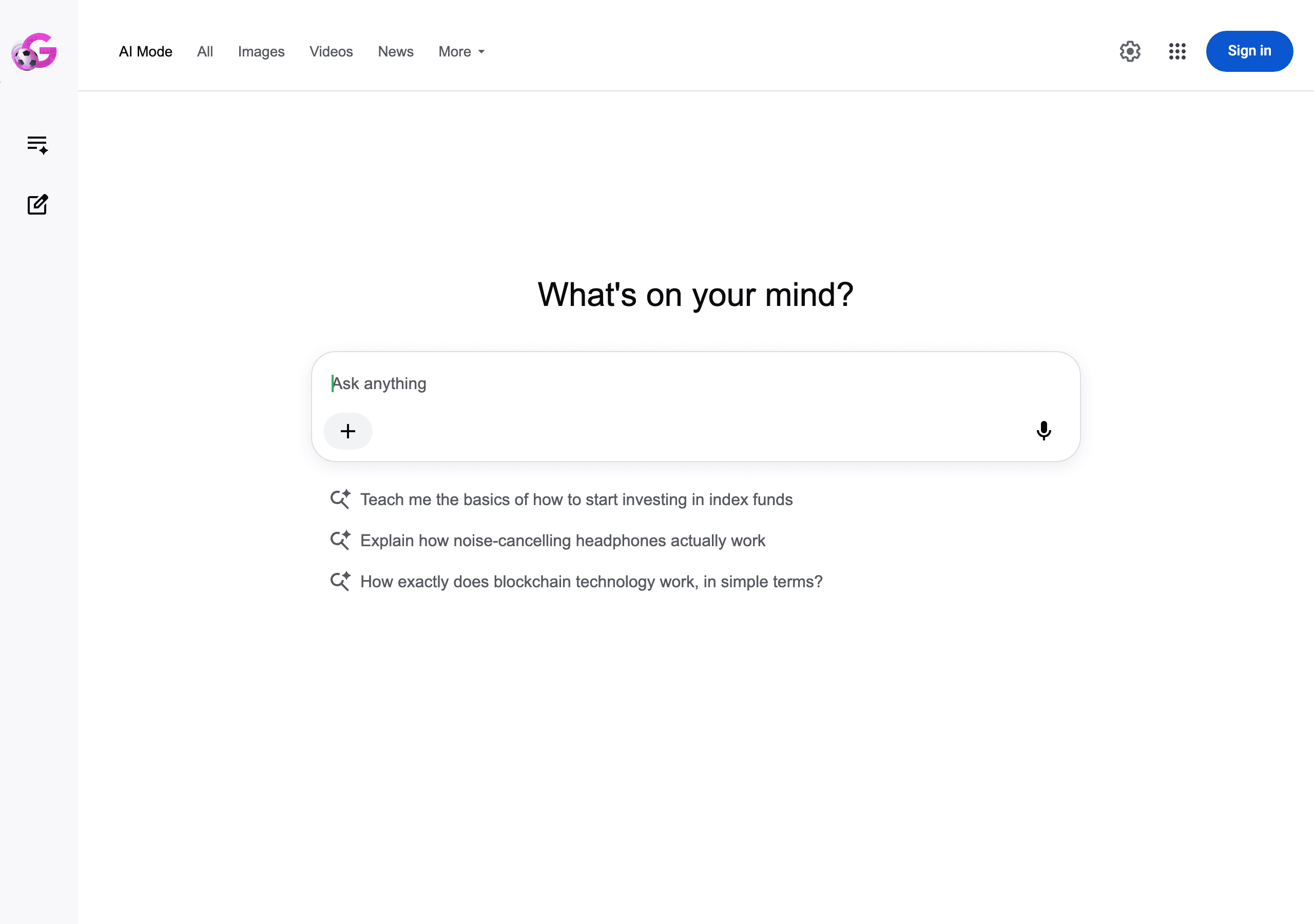
Traditional search ads sit above or beside organic results, and the separation is clear. In AI Mode, the ads appear inside a conversational interface where the answer and the ads are visually closer, but the ad is still functionally separate from the cited material. The question for advertisers is whether that placement drives clicks and conversions at an acceptable cost, and whether the lack of citation overlap matters if the user still sees the ad and acts on it. Google has stated that AI Overview ads earn revenue similar to traditional search ads, but per-format conversion data is not public.
SE Ranking also checked whether advertisers ranked organically for the same keyword. Only 2% of advertised URLs ranked for the keyword they paid for, and 15% matched at the domain level. That leaves roughly 85% of AI Mode advertisers with no organic presence for their ad keywords, meaning they are entirely dependent on paid placement to appear in the answer experience.
Google is expanding AI Mode advertising
Google announced new ad formats at Marketing Live, including Conversational Discovery ads and Highlighted Answers, both still in testing as of the publication date of the SE Ranking study. In her 2026 annual letter, Vidhya Srinivasan hinted at expanding AI Mode ads through the year. The company has not published detailed performance benchmarks, but the claim that AI Overview ads match traditional search ad revenue suggests the format is meeting internal targets.
The targeting constraints are worth understanding if you are considering buying these placements. Katerina Fotiadi, Director of Demand Generation, noted in the Search Engine Journal coverage that brands must use ad settings that hand advertisers the least control. Raluca Cîrjan, Performance Marketing Lead, specified that Google requires broad match or keywordless targeting for these placements, which historically leads to higher irrelevant search term volume and more manual exclusion work. If you value tight keyword control, AI Mode ads are not that.
What this means for brand visibility in AI search
If you track how often your brand appears in AI answers, ads are now part of the competitive set. A search that might have cited three or four brands organically now shows one or two ads at the top, and the user may never scroll past them. If you are measuring share of voice in AI Mode, you need to decide whether to count ads, filter them out, or track them separately, because a paid mention is not the same purchase as an organic citation.
For advertisers, the data suggests AI Mode is not a like-for-like replacement for traditional search ads. The audience is smaller, the targeting is looser, and your brand will not be woven into the answer text even though your ad sits inside the answer block. The format works if users click ads at a rate that justifies the CPC and the reduced control, and that will vary by niche and intent. Pets and Entertainment saw heavy ad frequency; Healthcare and News saw almost none. Test in your category rather than assuming the average holds.
The SE Ranking study is the first large-scale public measurement of AI Mode ad frequency by niche and CPC. As Google rolls out more ad formats and widens distribution, expect this 29% baseline to shift. For now, it is the most detailed snapshot available of how often commercial searches in AI Mode are monetised, and how rarely the ads and the cited sources align. If you want to know where your own brand sits in AI Mode and the other major answer engines, run a free AI visibility check at Honeyb and see which engines cite you and which do not.