Guide
How to track AI Overviews for your own brand
One look at an AI Overview tells you less than it seems, because the overview you saw this morning is not reliably the one your buyer sees this afternoon. One industry study found noticeable AI Overview volatility on more than 70% of the keywords it tracked, with overviews appearing and vanishing, sometimes daily. When Gemini 3 went live, a study of 100,000 US keywords found that 42.4% of the domains cited before the update had dropped out, and 51.7% of citations now went to domains that had never been cited. A single model update can quietly rewrite who gets named, and nobody sends you a notice.
It matters because the overview is increasingly where the search ends. Pew Research Center followed 900 US adults through 68,879 searches and found they clicked a traditional result in 8% of searches that showed an AI summary, against 15% of searches that did not, and clicked a link inside the summary just 1% of the time. When the summary answers the question, being inside it is the visibility.
Why your rank tracker cannot see it
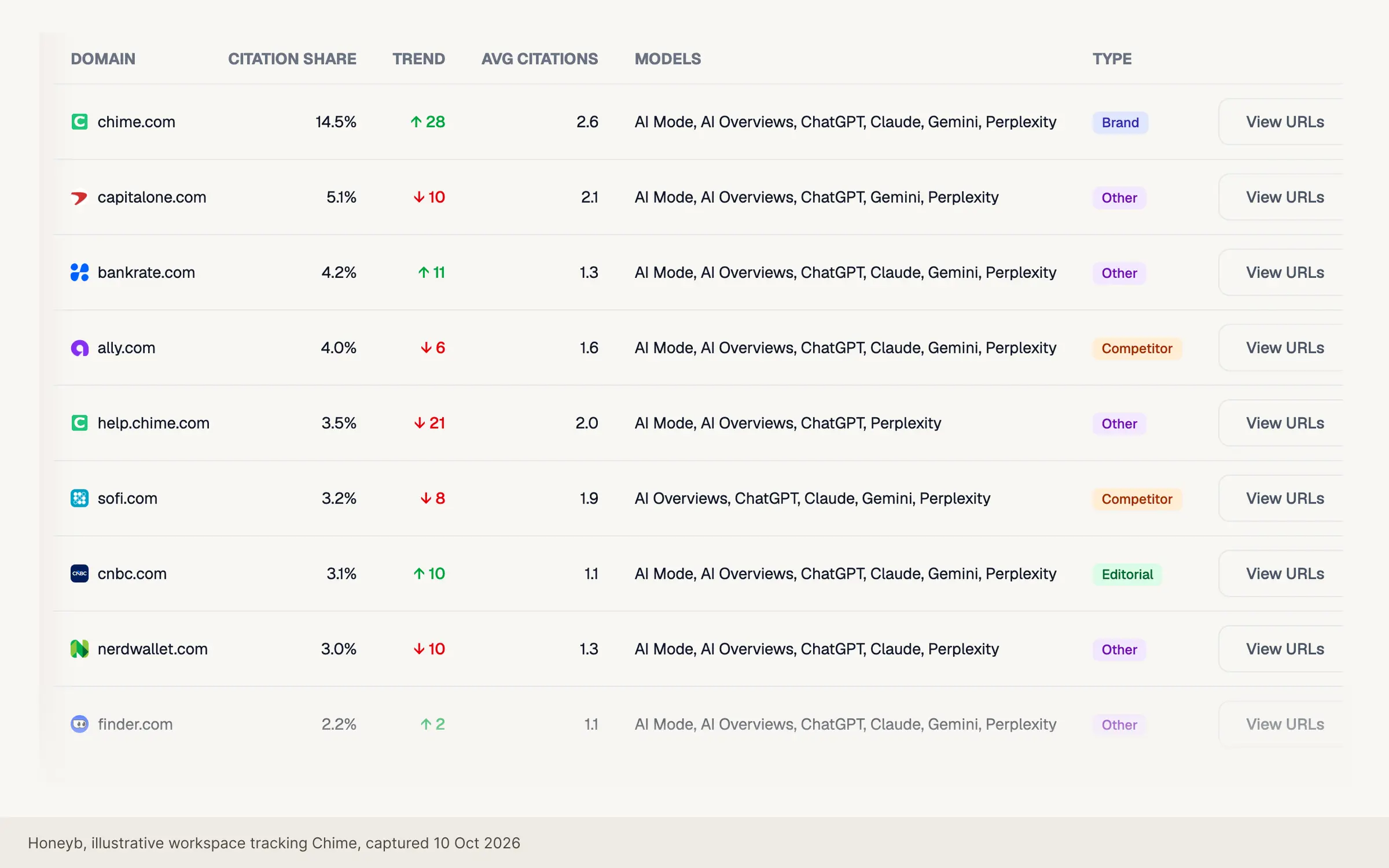
A large citation analysis found that only 38% of the pages cited in AI Overviews also ranked in the organic top 10, and in our own capture above, 71% of citations pointed outside it. Google retrieves a set of candidate pages and Gemini decides which of them to quote, so ranking makes you eligible without making you included. You can sit at position three and be absent from the answer, or sit at fourteen and be the source it paraphrases.
Search Console helps, up to a point
Since June 2026, Search Console reports impressions in Google’s generative features, AI Overviews and AI Mode included, and it is worth switching on. It reports impressions only: no clicks, no queries, nothing about how you are described or who appears next to you, and nothing at all about the other engines your buyers use.
A routine that works
- 01Start from questions, not keywords. Write down what a buyer asks before choosing a product like yours: category, comparison and problem questions. Twenty to fifty is plenty to begin with.
- 02Record a baseline. For each question, note whether an overview appeared, whether you were named, whether you were cited, and who was cited instead.
- 03Check weekly at the least. A monthly look is too coarse to catch a model update, and the questions that decide a purchase deserve a daily eye.
- 04When you drop, read the winners first. Look at the sources that replaced you before you rewrite your own page. The overview is usually quoting someone else, and that page tells you what it wanted.
- 05Watch the other engines too. Buyers ask ChatGPT, Gemini and Perplexity the same question, and the engines rarely agree on the answer.
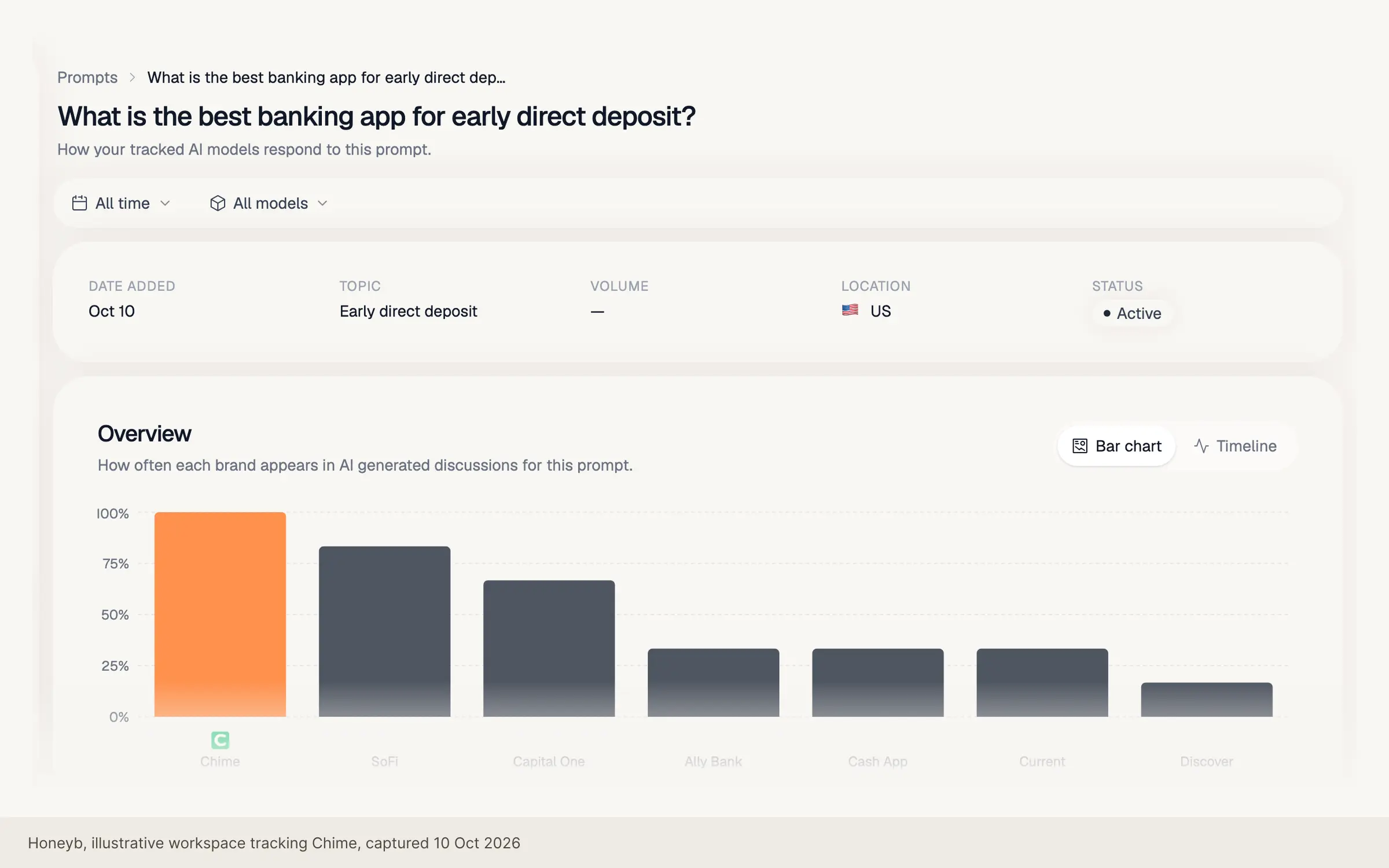
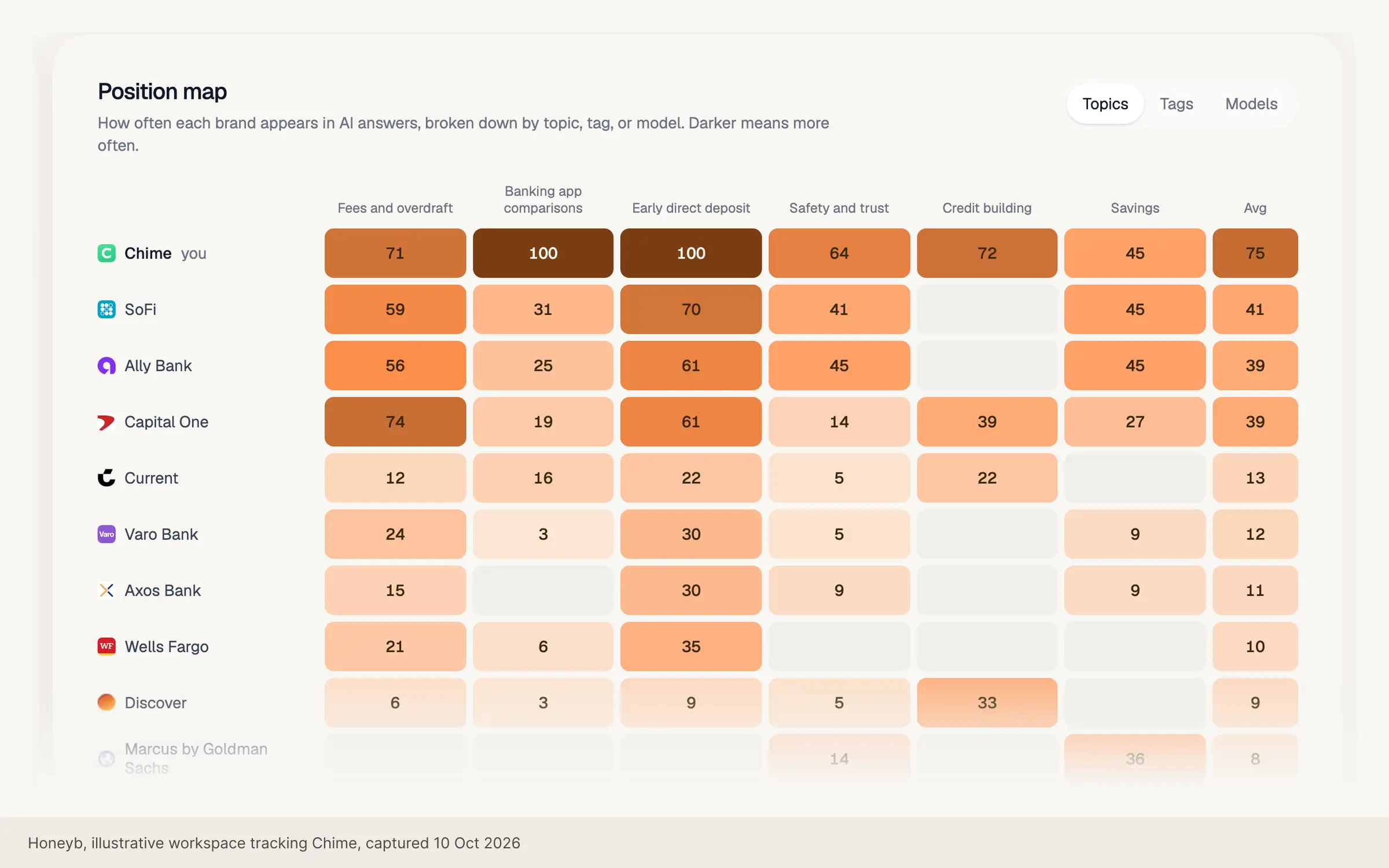
By hand, this works for a dozen questions. Beyond that it is the job Honeyb does every day across eight AI engines, before getting to work on the pages and sources that decide whether you are cited.
Sources: published industry studies of AI Overview volatility, of citations before and after Gemini 3 (100,000 US keywords) and of AI Overview citations against organic rank; Pew Research Center, July 2025; Google Search Central, June 2026.