
People compare Perplexity and ChatGPT as if they are rivals for the same job, but they were built to do different things, and the data shows it. When the Tow Center at Columbia tested eight AI search tools on whether they cite news correctly, Perplexity, the self-described research engine, still got the source wrong 37 per cent of the time, the lowest failure rate in the study. ChatGPT, by contrast, often answers without searching at all, so there is nothing to check. That single contrast captures the real divide: Perplexity is an answer engine that searches the live web and returns a synthesised answer with numbered citations, while ChatGPT is a general-purpose assistant that searches only when a question demands it. Knowing which one fits the task in front of you matters more than knowing which is objectively better. This guide compares the two across how they work, sourcing, accuracy, models, and pricing, then gives a verdict by job.
How each one works, and what it optimises for
The clearest way to understand the difference is to watch what each tool does the moment you ask a question.
Perplexity treats every query as a research task. It runs a live web search, retrieves a set of sources, ranks and extracts the relevant passages, then generates an answer where each claim carries a clickable citation back to the page it came from. This is retrieval-augmented generation applied as the default behaviour, not an optional mode. The answer and its evidence arrive together by design. For a deeper look at the mechanics, see how AI search works.
ChatGPT starts from a different assumption. Its default behaviour is to answer from the model's own knowledge, and it reaches out to the web only when the question clearly needs fresh or specific information, or when you turn search on. That makes it broader: it will write, summarise, code, brainstorm, or hold a long conversation without ever touching a source. When it does search, it returns an answer with links, but the citation is a supporting feature rather than the centre of the product.
In short, Perplexity optimises for trustworthy, sourced answers to information questions. ChatGPT optimises for being a flexible assistant that does many things, of which web search is one. The split shows up in how each one has grown, too. For a wider view of how the leading tools stack up, see the rundown of the best AI search engines in 2026.
Citations and sourcing
This is where the two products feel most different in day-to-day use.
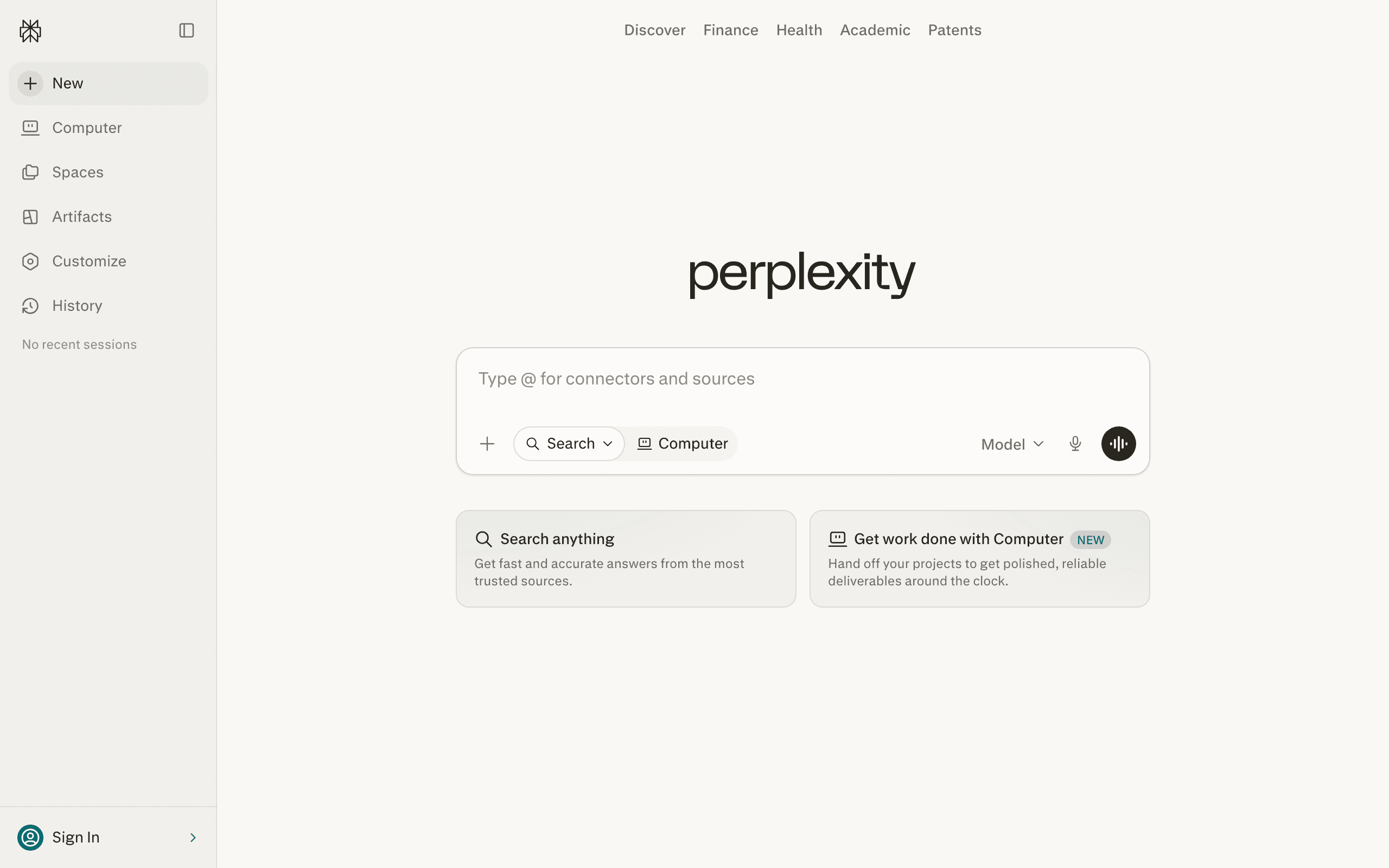
Perplexity shows its sources by default on every answer. Numbered footnotes sit inline next to the claims they support, and a source list appears alongside the response. For research, fact-checking, and any question where you need to verify before you act, this is a genuine advantage. You can see what the answer was built from and click through to judge the source yourself. Standard searches are uncapped on the free plan, and Pro Search, the deeper multi-step mode that reads further into more pages, is allowed about five times a day before it is gated.
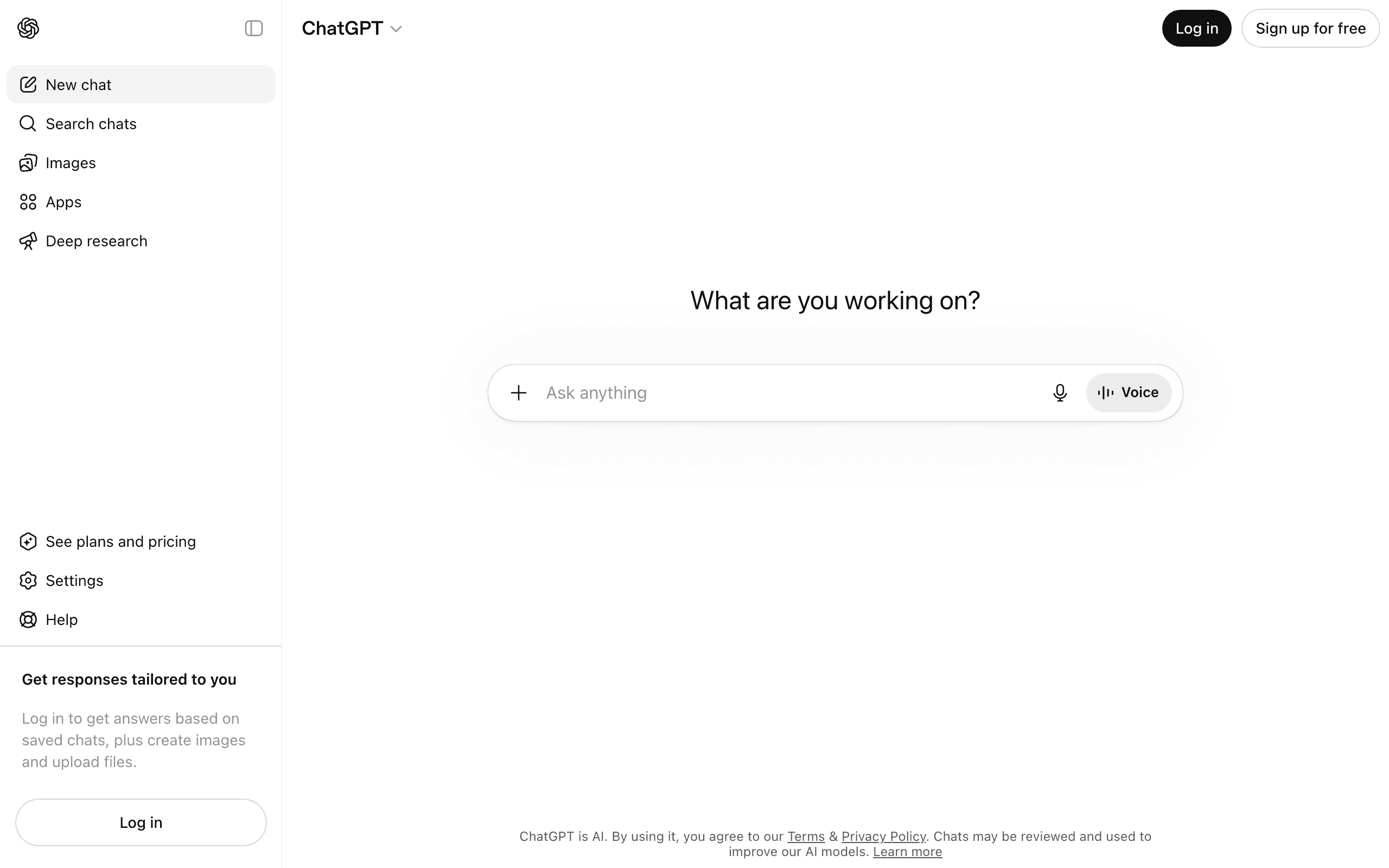
ChatGPT does cite when it searches the web, and free users can run web search without logging in. OpenAI's own ChatGPT Search documentation describes how the assistant shows inline citations you can hover and click, with a sources panel beneath the response for the pages it used. The links are real and clickable. The difference is consistency: because ChatGPT only searches when it judges the question needs it, a given answer may be sourced, partly sourced, or generated entirely from training with no citations at all. For a casual question that is fine. For anything you plan to rely on, you have to check whether the answer actually searched, which adds a step Perplexity removes.
One caution applies to both. A citation proves where a passage came from, not that the sentence above it is faithful to the source. The Tow Center study found that the dominant error across most tools was not invented URLs but misattribution: a real, working link credited with a claim it does not actually contain. Citations make that easier to catch. They do not make checking optional.
Accuracy and hallucination behaviour
Neither tool is hallucination-free, and anyone claiming otherwise is overselling. The useful question is how each one fails and how easy the failure is to catch.
The most rigorous independent test of citation accuracy remains the Columbia Journalism Review's Tow Center study, which ran 1,600 queries across eight AI search tools. Collectively the tools cited sources incorrectly more than 60 per cent of the time. Perplexity came out best at a 37 per cent error rate, and its characteristic failure was misattribution: the citation was real, but the sentence it supported stretched or misread the page. Because the source sits right there, that is usually quick to spot if you click through. ChatGPT Search misidentified 134 of 200 articles in the same test and signalled doubt about its answer only fifteen times, which is the harder failure to catch: a confident answer with no flag that it might be wrong.
ChatGPT's accuracy depends heavily on whether it searched. When it does, performance on current questions is strong and verifiable. When it answers from training data alone, it can produce a fluent, plausible answer that is wrong or out of date, with no source to check against. OpenAI has worked the problem hard: it reports that GPT-5.5 Instant, the default model since May 2026, produces about 52 per cent fewer hallucinated claims than its predecessor on high-stakes prompts covering areas such as medicine. The catch is structural. When a model answers fact-seeking questions without searching, the risk of confident invention climbs, which is exactly why the safest habit with ChatGPT is to tell it to search whenever accuracy matters.
The honest read on both: grounding lowers the rate of confident invention, but it does not eliminate error, and the most common mistake is a real source pointed at the wrong claim. Treat citations as a head start on verification, not a substitute for it. For why a single good answer does not prove durable visibility, see why spot-checking fails when you need to trust a tool over time.
Models offered
Both products give you capable frontier models, but they package them very differently.
ChatGPT runs on OpenAI's own model family. The default is GPT-5.5 Instant, which became ChatGPT's standard model in May 2026, with heavier reasoning variants for harder work and a Pro variant reserved for the paid Pro tiers. The 5.5 Instant model replaced the earlier GPT-5.3 Instant as the everyday default. You are choosing between variants of one provider's models, tuned for speed versus depth.
Perplexity takes the opposite approach: it is model-agnostic and lets paid users pick the engine behind an answer. In the Pro model picker you can route a query to Perplexity's own Sonar model, tuned for search-and-synthesis, or to third-party frontier models such as the GPT-5 series, Claude Opus and Sonnet, and Gemini 3.1 Pro. The line-up moves: Perplexity pulled Grok and Gemini Flash from the picker in early 2026, so treat the exact roster as a snapshot. The practical upshot is that Perplexity lets you match the model to the task, while ChatGPT gives you a tightly integrated single-vendor stack. Perplexity has also pushed beyond the chat box with Comet, its agentic browser, now free worldwide, which can read pages, compare products, and complete multi-step tasks on your behalf.
Pricing and tiers (verified June 2026)
Both offer a real free tier and then several paid steps. The figures below are current as of June 2026. Pricing and limits change often, so check each provider before you commit.

Want to get recommended by AI?
Check your AI search visibility, then let the Honeyb agent write, fix, and earn what gets you recommended. Free to start.
ChatGPT spans Free, Go at around 8 US dollars a month, Plus at around 20 US dollars a month, a Pro line split across roughly 100 and 200 US dollars a month, plus Business at about 20 to 25 US dollars per seat a month and custom Enterprise pricing. Since February 2026, the Free and Go tiers carry advertising for logged-in US users, shown in contextual boxes kept separate from the answer; every paid tier stays ad-free. Plus is the common choice for individuals who want the full model suite without ads.
Perplexity offers Free, Pro at 20 US dollars a month (around 200 a year), Max at about 200 US dollars a month, Enterprise Pro at roughly 40 US dollars per seat a month, and Enterprise Max at around 325 US dollars per seat a month, with a discounted student rate around 10 US dollars a month. The free plan keeps standard search uncapped and allows about five Pro Searches a day. Pro lifts those limits and unlocks the model picker and the range of search models Perplexity makes available to paid users.
| Feature | Perplexity | ChatGPT |
|---|---|---|
| Core design | Cited answer engine, search-first | General assistant, search on demand |
| Citations | On by default, every answer | When it searches the web |
| Web search default | Always | When the question needs it |
| Free tier | Uncapped standard search, ~5 deep searches a day | Full chat plus web search, ads for US logged-in users |
| Entry paid tier | Pro, around 20 USD per month | Plus, around 20 USD per month |
| Model choice | Pick Sonar, GPT-5 series, Claude, Gemini and more (paid) | OpenAI GPT-5.5 variants only |
| Independent citation accuracy | 37% error rate (lowest in Tow Center test) | Misidentified 134 of 200 articles in same test |
| Strongest at | Research, verification, current questions | Writing, coding, reasoning, broad tasks |
Free versus paid: what you actually get
On the free tier, the two products serve different needs well. Perplexity Free is a strong everyday research and fact-finding tool because the citation behaviour and standard search are not gated. ChatGPT Free is a strong general assistant for writing and reasoning, with web search available, though US logged-in users now see ads and the top models stay behind a subscription.
Paying changes the picture in line with each product's purpose. Perplexity Pro is worth it if you do frequent, deeper research and want to choose your model and run more deep-research passes. ChatGPT Plus is worth it if you use the assistant heavily across writing, coding, and reasoning and want the full model suite without ads. The higher tiers on both sides target power users and teams: Perplexity Max and Enterprise plans for research-intensive work, ChatGPT Pro and Business for heavy individual and team usage.
A simple rule of thumb: if most of your questions are "find and verify information", Perplexity's paid tier returns more value per pound. If most of your work is "produce something", ChatGPT's does.
A decision framework: match the job to the tool
Rather than crown one winner, map the job to the tool. The split is clean once you separate questions that have a correct answer somewhere on the web from tasks that produce something new.
- Research with verifiable sources, literature scans, fact-checking, comparing options: Perplexity, because the citations come built in.
- Current events and freshness-critical questions: Perplexity by default; ChatGPT only if you tell it to search.
- Long-form writing, editing, and tone work: ChatGPT, which is built around generation.
- Coding, debugging, and technical reasoning: ChatGPT, with Perplexity useful when you also need cited documentation.
- Brainstorming, planning, and open-ended conversation: ChatGPT, for its flexibility and memory of the thread.
- Quick factual lookups where you want a source to click: Perplexity, every time.
The honest summary is that many people benefit from using both. Perplexity is the better default for "what is true and where did it come from". ChatGPT is the better default for "help me make this thing".
The verdict by job
Is Perplexity better than ChatGPT? For sourced research and verification, yes. For general-purpose assistance and creation, no. The two are not really competing for the same job, which is why the head-to-head framing can mislead.
Choose Perplexity when the value is in the answer being correct and traceable: market research, due diligence, comparing products, checking a claim, or staying current on a fast-moving topic. Choose ChatGPT when the value is in what gets produced: drafts, code, plans, analysis, and extended back-and-forth. If you can only justify one paid subscription, pick the one that matches the work you do most days. If you can run both for free, do, and send each question to the tool built for it.
The market context reinforces the point. ChatGPT is still the largest AI assistant by usage, but in May 2026 its share slipped below 50 per cent for the first time, to roughly 46 per cent, with Gemini in clear second around 28 per cent. Perplexity holds a small share of under 5 per cent, yet it is one of the fastest-growing tools in the category. The chart below shows how the leading engines have moved over time, and the May 2026 market-share breakdown digs into the numbers.
Market share (%)
Top four generative AI chatbots compared (ChatGPT figure includes Copilot)
Perplexity is the smaller engine of the two by overall usage, but the trend in how often people look for it has run steadily upward. Search interest for the brand has climbed as more buyers reach for a citation-first tool, which is part of why it punches above its raw market share.
Monthly searches (US)
Search demand for "perplexity ai"
What this means for a brand that wants to appear in both
If you are a marketer or founder rather than an everyday user, the comparison reframes itself: these are two distinct surfaces where buyers form opinions about your brand, and they reward different things.
Perplexity, being citation-first, surfaces and links the sources it trusts. Earning a mention there is closely tied to being the kind of page Perplexity retrieves and cites: clear, current, well-structured content, plus a credible presence on the third-party sites and communities answer engines lean on. ChatGPT, which answers from model knowledge and searches selectively, rewards brands well-represented across the wider web that trains and grounds these models, so that you are recommended even when no live search runs.
Because the two engines decide differently, a brand can be visible in one and absent in the other. Understanding the selection logic helps: how AI models choose which brands to recommend covers the signals that move both. If your specific concern is where your brand ranks when buyers ask these tools for recommendations, the companion piece on Perplexity vs ChatGPT brand ranking goes deeper on that angle.
The practical takeaway is that you should not assume good visibility in one engine carries over to the other. Check both, track how each describes and ranks you over time rather than spot-checking once, and treat the two as separate surfaces that happen to share a category. The comparison that matters for a brand is not which engine is better, but whether you show up well in each of them.
Sources cited in this report