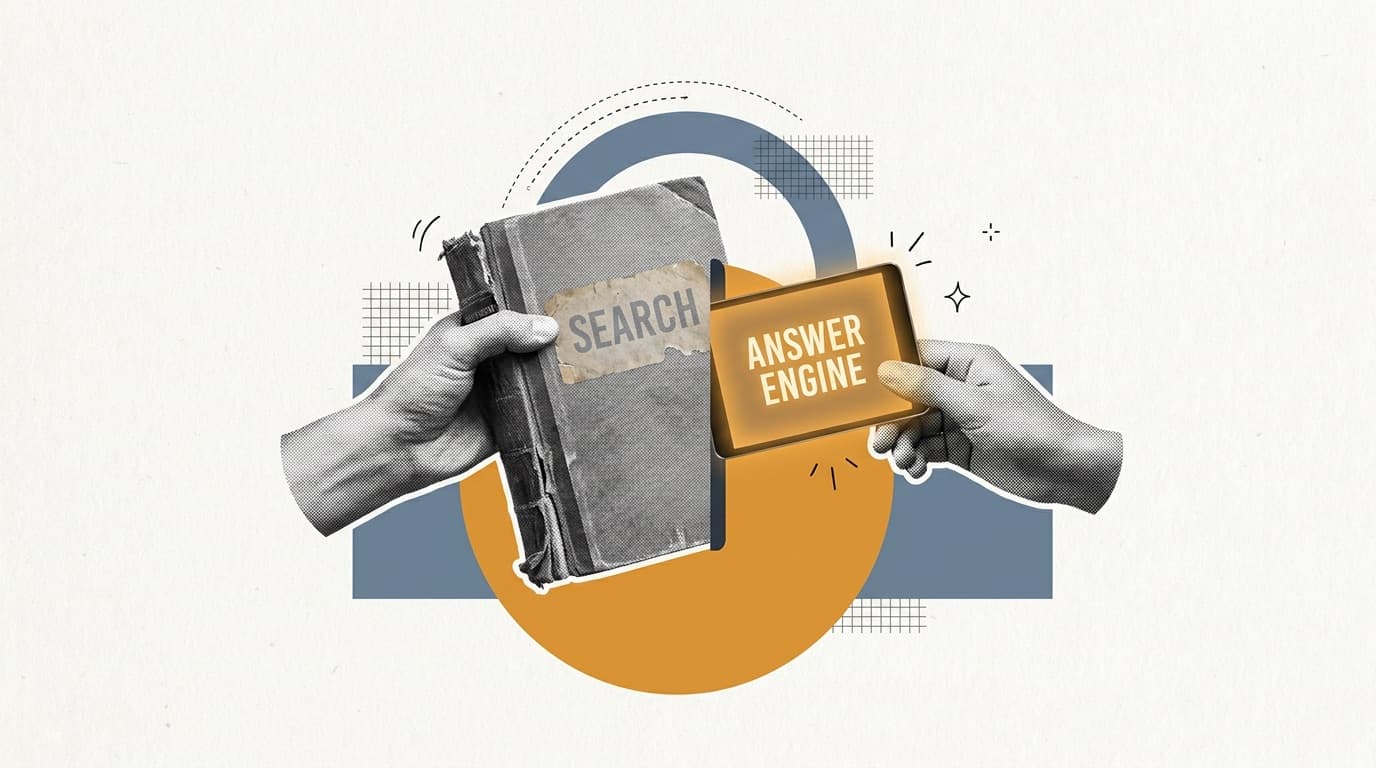
The question is no longer whether AI changes search. It is whether a cited answer engine like Perplexity can displace a habit two billion people built around Google over two decades. The honest answer in mid-2026 is that the two products are sprinting toward the same screen from opposite starting lines. Perplexity reads a handful of sources and writes you one referenced answer. Google still returns a ranked page of links, now topped by AI Overviews that reach more than two billion people a month and a conversational AI Mode. The gap between them is narrowing on the surface and widening underneath, because they are built on opposing bets about how attention and money should flow. This guide compares them on the five things that actually decide which one you open: sourcing, breadth, freshness, advertising and accuracy.
Two opposite bets wearing the same interface
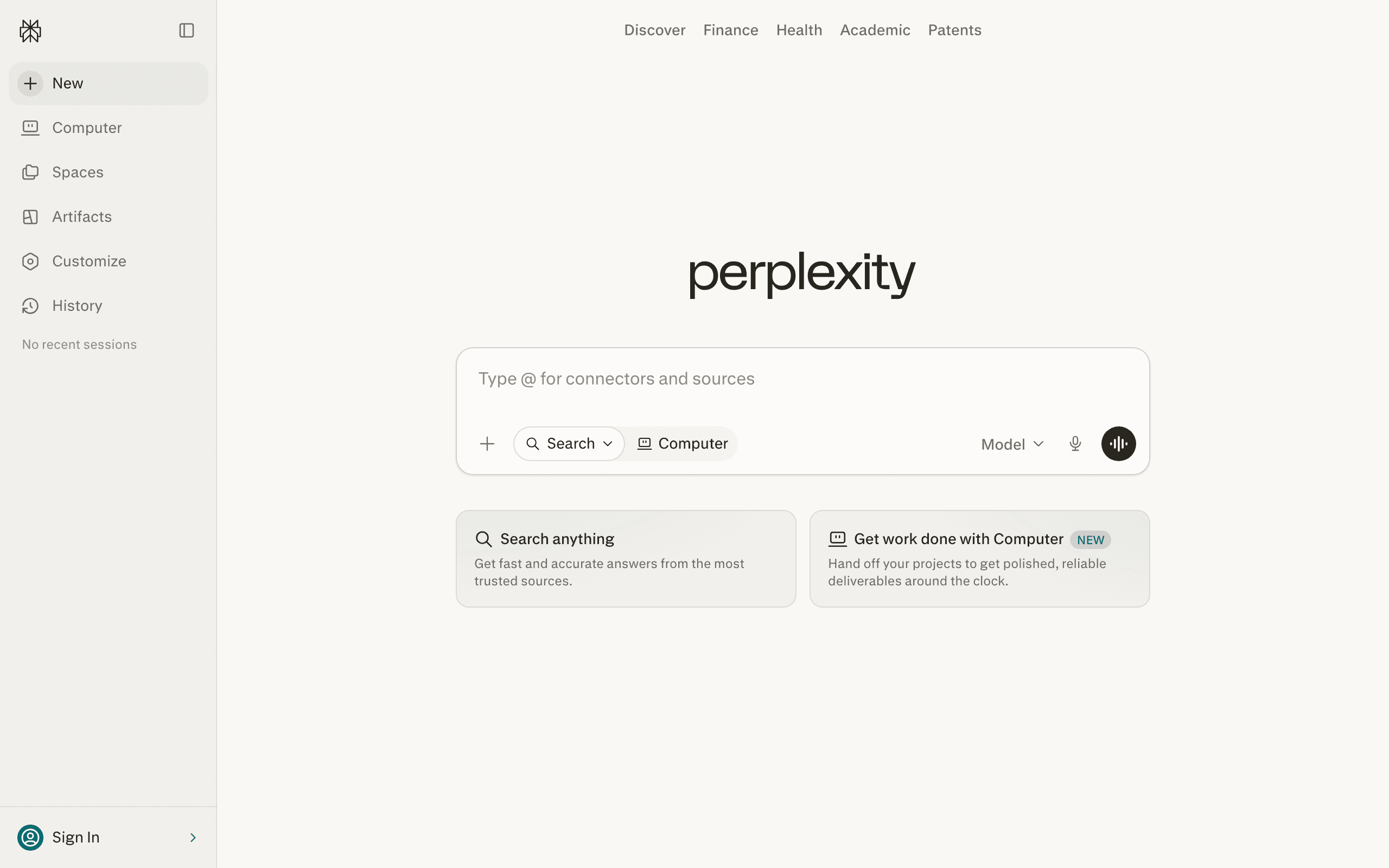
Perplexity is an answer engine. You ask a question, it runs searches against its own index plus live web results using its in-house Sonar models, then synthesises a short answer with numbered citations sitting next to each claim. The default behaviour is to resolve the question on the page rather than send you elsewhere. That is the same shift we unpack in AI search versus traditional search: the unit of output is an answer, not a list of ten blue links. By mid-2026 Perplexity is handling an estimated 1.2 to 1.5 billion queries a month, roughly five to six times its 2024 volume, and it has pushed the model into a browser, Comet, that can read every open tab and run multi-step tasks on your behalf.
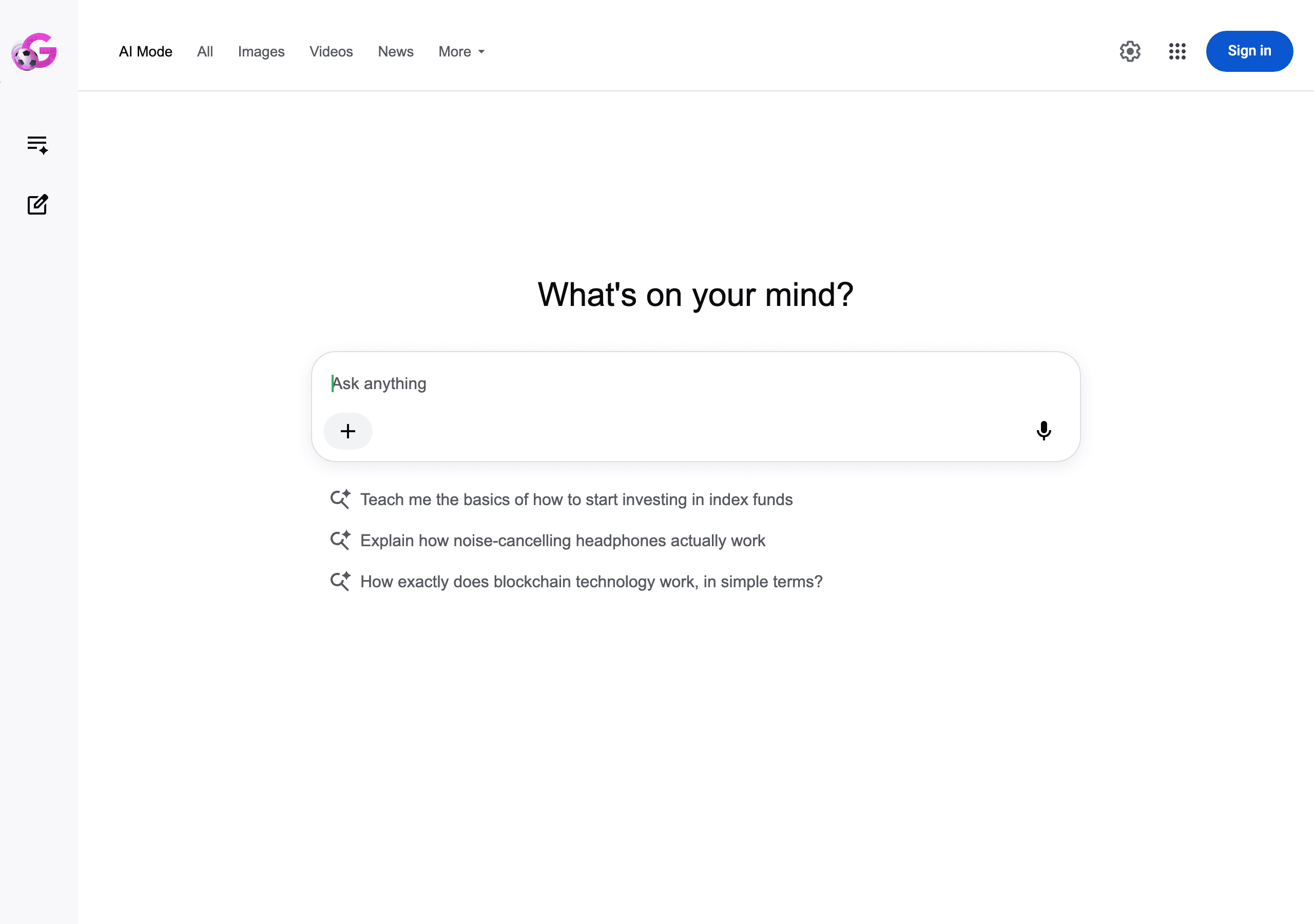
Google is a search engine that has bolted AI on top of a working machine. The classic results page is still there, with organic listings, ads, maps, shopping and knowledge panels. Above it, AI Overviews summarise common informational queries, and AI Mode offers a full conversational surface for follow-ups and comparisons. Google frames these as ways to help you explore the web rather than replace it, and on 6 May 2026 it shipped five changes specifically to surface more links inside AI responses: inline links placed next to the exact claim they support, suggested next angles for deeper research, highlighted links from your own news subscriptions, firsthand perspectives from public discussions with creator names attached, and hover previews of the source site on desktop.
Sourcing and citations: the clearest dividing line
This is where the two products genuinely diverge, and it is not really about whether either cites. Both do. It is about where the citation sits and who it is designed to serve.
Perplexity puts citations at the centre of the experience. Every claim carries a numbered reference, and the source list sits beside the answer so you can verify or read further. That is what people mean when they call it an answer engine you can audit. Google cites too, and after the May 2026 update its inline links land next to the specific sentence they support. But the attribution is lighter and, crucially, the click economics run the other way.
The hard data comes from the Pew Research Center, which analysed 68,879 Google searches from 900 US adults in March 2025. Users clicked a traditional result link on just 8% of visits where an AI summary appeared, against 15% when no summary was shown. Only 1% of visits ended with a click on a source cited inside the AI summary itself, and users were far more likely to abandon the session entirely: 26% of pages with a summary ended the browsing session, versus 16% without. (Pew Research Center) Pew also found the typical summary ran about 67 words and that 88% cited three or more sources. The citations exist. People simply do not click them.
So both engines summarise, but the intent differs. Perplexity is designed to make you read the sources. Google's AI surfaces are designed to keep you on Google. For anyone tracking brand visibility, the lesson is blunt: a citation in either engine now earns a fraction of the traffic a top organic ranking once did, which is exactly why being mentioned at all has become the thing to measure. We cover that shift in detail in why spot-checking AI visibility fails.
Breadth: everyday tasks versus deep research
Breadth is where Google still wins comfortably, and not by a little. Google holds roughly 90% of global search share as of early 2026 (90.04% across all devices in January, per StatCounter) and handles the full long tail of human intent: navigation, local business hours, maps, flights, shopping, images, sports scores and the quick factual lookup. It is the reflex for where, when, how much and how do I get there, because Maps, Shopping, Flights and Images are wired directly into the results page.
Perplexity is narrower by design and stronger precisely where breadth is not the point. It excels at research that spans several sources: comparing vendors, summarising an unfamiliar topic, pulling together specifications, or assembling a quick literature review with references attached. If you want one synthesised, cited answer instead of opening eight tabs, the answer engine is faster and the output is already structured. If you want to find a place, buy a thing, or navigate somewhere, Google's ecosystem is hard to beat. A simple test: if your question ends in a verb (compare, explain, summarise), lean Perplexity; if it ends in a noun (a place, a product, a number), lean Google.
Freshness and real-time data
Both engines fetch live web results, so both can answer about recent events. Google's edge is structured real-time data: live scores, stock quotes, flight status, weather and local inventory surface directly through dedicated panels and data partnerships, not by reading a webpage. Perplexity reads the open web in real time and cites what it finds, which works well for breaking news and fast-moving topics, but it cannot match Google's structured feeds for the most time-sensitive numeric lookups.
A useful rule holds here: Google is better at what is happening right now in a structured, numeric sense, while Perplexity is better at explaining what is going on and showing you the reporting behind it. Ask Google for the score; ask Perplexity what the result means.
The advertising divide, and why it shapes everything else
Business models shape products, and here the two have split decisively. Google Search is an advertising machine. Search and other advertising revenue reached $63.07 billion in Q4 2025, up 17% year on year, and Google is steadily testing ads inside AI Overviews and AI Mode. (Search Engine Journal) That funds a free product used by billions, but it also means sponsored content sits alongside, and increasingly inside, the AI answer.

Want to get recommended by AI?
Check your AI search visibility, then let the Honeyb agent write, fix, and earn what gets you recommended. Free to start.
Perplexity went the opposite way. It began testing ads in November 2024 with sponsored follow-up questions, then announced on 18 February 2026 that it was abandoning advertising entirely, having gradually removed the units from the end of 2025. The reasoning was telling: ad revenue was a rounding error (reportedly under 0.1% of 2024 revenue) while the trust cost was not, and the company argued that sponsored content inside a cited answer poisons the core promise of the product. (MacRumors) It leans on subscriptions instead: a permanent free tier, Pro at $20 per month, and Max at $200 per month, plus enterprise seats and a Publisher Program that shares revenue with cited sources. Annualised recurring revenue reportedly crossed $200 million by October 2025, with a $500 million target for end of 2026. Whether subscriptions scale against an ad giant is an open question, but for now the answer is cleaner because no one is paying to appear in it.
This divide is the engine behind every other difference. Google optimises to keep you on Google because that is where the ads are. Perplexity optimises for a clean, trustworthy answer because that is what people pay for. The interfaces are converging; the incentives are not.
Accuracy and trust
Neither engine is a final authority. AI Overviews drew early ridicule for surreal mistakes, and the stakes rose sharply in January 2026 when a Guardian investigation found Google's AI summaries gave misleading health information, including advising people with pancreatic cancer to avoid high-fat foods (which clinicians warned could worsen outcomes) and serving liver blood-test ranges stripped of the context that makes them meaningful. Google removed AI Overviews for a set of health questions soon after. (Euronews) Perplexity's citation-first layout makes verification easier, since sources sit one line from each claim, but it can still misattribute or oversimplify, and any answer is only as good as the pages it read.
The reasonable position is that both tools are useful first drafts, not verdicts. The difference is friction: Perplexity makes checking its work the default, while Google's AI surfaces make checking optional, which the Pew data suggests most people skip.
A side-by-side comparison
| Dimension | Perplexity | |
|---|---|---|
| Core model | Cited answer engine (Sonar models) | Search engine plus AI Overviews and AI Mode |
| Default output | One synthesised answer with numbered citations | Ranked links, with an AI summary on many queries |
| Citations | Central, beside every claim | Present, lightly clicked (1% of visits, per Pew) |
| Breadth | Strong on research and comparison | Dominant across everyday, local and transactional intent |
| Freshness | Live web reading with sources | Structured real-time feeds (scores, flights, weather) |
| Advertising | Abandoned in early 2026; subscription-led | Core ad business; ads expanding into AI surfaces |
| Scale | ~1.2 to 1.5bn queries/month, growing fast | ~90% of global search; 2bn+ AI Overview users |
| Best for | Explain, compare and cite this | Find, navigate, buy and check the number |
Demand is shifting at the margin, not collapsing
Search habits are moving at the edges rather than flipping overnight. Google's share has barely budged, yet interest in answer engines has climbed steeply, and AI surfaces now absorb a meaningful slice of the informational queries that used to send organic clicks to publishers.
Monthly searches (US)
Search demand for "perplexity ai"
The signal for brands is not that Google is finished. It is that a growing share of high-intent research now happens inside cited answers where there are no ten blue links to rank in. You either appear in the answer or you do not, on both engines, and increasingly the same content has to earn its place in two very different systems at once. For the wider picture of where the demand is going, see our AI search statistics for 2026.
When each one wins
Use Perplexity when you want a referenced synthesis: comparing products or vendors, researching an unfamiliar field, drafting from multiple sources, or any question where seeing the citations matters more than the speed of a single fact. Its design rewards reading the sources, and the absence of ads keeps the answer uncluttered. The same logic explains why people increasingly run vendor research through it rather than a search box, which we explore in how AI models choose which brands to recommend.
Use Google for the long tail of daily intent: local lookups, navigation, shopping, live data, images and the fast factual check. Its ecosystem and structured feeds remain unmatched, and AI Mode now resolves many follow-ups without leaving the page. For a sharper head-to-head between the two leading answer engines themselves, see Perplexity vs ChatGPT for brand ranking.
What this means for your brand's visibility
If your audience researches on both engines, you now manage two distinct visibility surfaces that reward different things. On Google, AI Overviews still lean on the familiar signals (strong content, structured data, authority) plus the new May 2026 emphasis on passage-level writing and firsthand sources. On Perplexity, the lever is being a source genuinely worth citing: clear, well-structured, frequently referenced content that an answer engine can quote with confidence. A growing slice of both depends on third-party validation, which is why answer engines lean so heavily on community and review signals, a pattern we trace in why AI models cite Reddit.
The hard part is knowing where you actually stand. A page can rank well on Google yet never surface in a Perplexity answer, or get cited by Perplexity while staying invisible in AI Overviews. Checking by hand does not scale across engines, prompts and competitors, and a single spot-check tells you nothing about whether a mention is stable. This is the gap Honeyb is built to close: it tracks how your brand is mentioned, cited and described across Perplexity, Google AI Mode and AI Overviews, ChatGPT, Gemini, Claude and Copilot, runs those checks on a schedule, and benchmarks you against competitors so you can see which engine sends you mentions and which leaves you out. Start with the free AI visibility checker to see a snapshot of where you stand today.
Sources cited in this report