
AI search tools live in three places. Dedicated engines such as ChatGPT, Perplexity, Gemini, and Claude run free in any browser at their own web addresses. AI answers are also built into products you already use, including Google Search, Windows, Microsoft Edge, and the Brave browser. For brands, there is a third category: monitoring platforms that track how those engines describe and recommend you.
That answer surprises people who expect a single app-store category. There is no one place to download AI search. The engines are websites first, apps second, and increasingly features inside software you opened for another reason. This guide maps the territory, from the dedicated engines and the built-ins to the privacy-first corner, the team and developer tiers, and the monitoring layer for brands. If the field is new to you, what is AI search covers the basics first.
Dedicated AI search engines
The fastest route is to visit an engine directly. The major names are ChatGPT, Perplexity, Google's Gemini, Anthropic's Claude, Microsoft Copilot, and xAI's Grok. Each is a website you can open right now, ask a full question in plain language, and get a written answer back. Most offer free access, though the terms vary. Grok's free tier is rate-limited, with paid capabilities in xAI's SuperGrok tiers.
Usage concentrates heavily at the top: ChatGPT, including Copilot, held roughly 73% of generative-AI chatbot usage as of April 2026, with Gemini around 15%, Perplexity at 5-6%, and Claude near 5%.
Share is not the same as fit, though. The engines differ in how they cite sources, how current their answers are, and how they handle shopping and research queries. We compare all ten leading options, with strengths and weaknesses for each, in the best AI search engines for 2026. This post stays focused on where things live, not which one wins.
Built into what you already use
You may already be using AI search without ever choosing it. The biggest engines have stopped waiting for you to visit them:
- Google Search carries AI Overviews above traditional results, plus AI Mode, the udm=50 conversational surface inside Search itself
- Copilot is grounded in Bing and built into Windows, Edge, and Microsoft 365, one keystroke away for most office workers
- Brave ships the Leo assistant inside its browser, alongside the conversational Ask Brave mode
- Most dedicated engines publish mobile apps, so the same account follows you from desktop to phone; search the official name in your phone's app store, since lookalike apps are common
The practical upshot: before you hunt for a new tool, check what is already installed. For many people, the AI search era arrived through a software update rather than a decision. To see how these built-in answers differ from the classic ten blue links, AI search vs traditional search walks through the comparison.
Privacy-first options
Duck.ai, from the DuckDuckGo team, gives anonymised access to several AI models with no account required. It is the lowest-friction way to try AI chat without handing over an email address, and the most direct answer for anyone whose first question about AI search is what happens to my data.
Brave Search runs its own independent index rather than licensing results from a larger engine. AI Answers summarize sources directly on the results page, Ask Brave handles conversational follow-ups, and Leo sits inside the browser. Together they make Brave one of the more complete privacy-focused stacks available.
Kagi takes the opposite commercial route: subscription-only, with its Assistant included on every plan. Paying for search remains a minority position, but the model removes the advertising incentives that shape free engines, which is precisely the appeal for its audience.
For teams and developers
Most engines now sell business tiers alongside their consumer products. Perplexity launched Enterprise Pro in April 2024, and the other major providers offer team and enterprise plans aimed at organizational use. The specifics shift often enough that current pricing pages are the only reliable source.

Want to get recommended by AI?
Check your AI search visibility, then let the Honeyb agent write, fix, and earn what gets you recommended. Free to start.
Developers have a separate door. The model providers behind these engines expose APIs, which lets teams build retrieval-grounded answering into their own products instead of sending users elsewhere. To understand the moving parts involved, from embeddings to citation layers, the key technologies behind AI search breaks them down.
For brands: monitoring tools
The third place AI search tools live is on the brand side, and it matters once you stop being the searcher and become the thing searched for. The Capgemini Research Institute found that 58% of consumers say generative AI has replaced traditional search for them, a figure we put in context in our AI search statistics roundup. When that many buying conversations happen inside AI answers, brands need to know what those answers actually say. ChatGPT Shopping now places product cards inside commercial answers too, a shift we cover in what ChatGPT Shopping means for brands.
That is the job of AI visibility monitoring. Honeyb runs your buyers' real questions across ChatGPT, Perplexity, Gemini, and other engines on a schedule, then tracks whether your brand appears, how it is described, and which sources the engines rely on. The scheduling part is not optional. Ahrefs found that AI Overviews change every 2.15 days on average, with a 70% chance of changing from one observation to the next, which means a screenshot taken today describes today only. We unpack that finding in our breakdown of Ahrefs' AI search research.
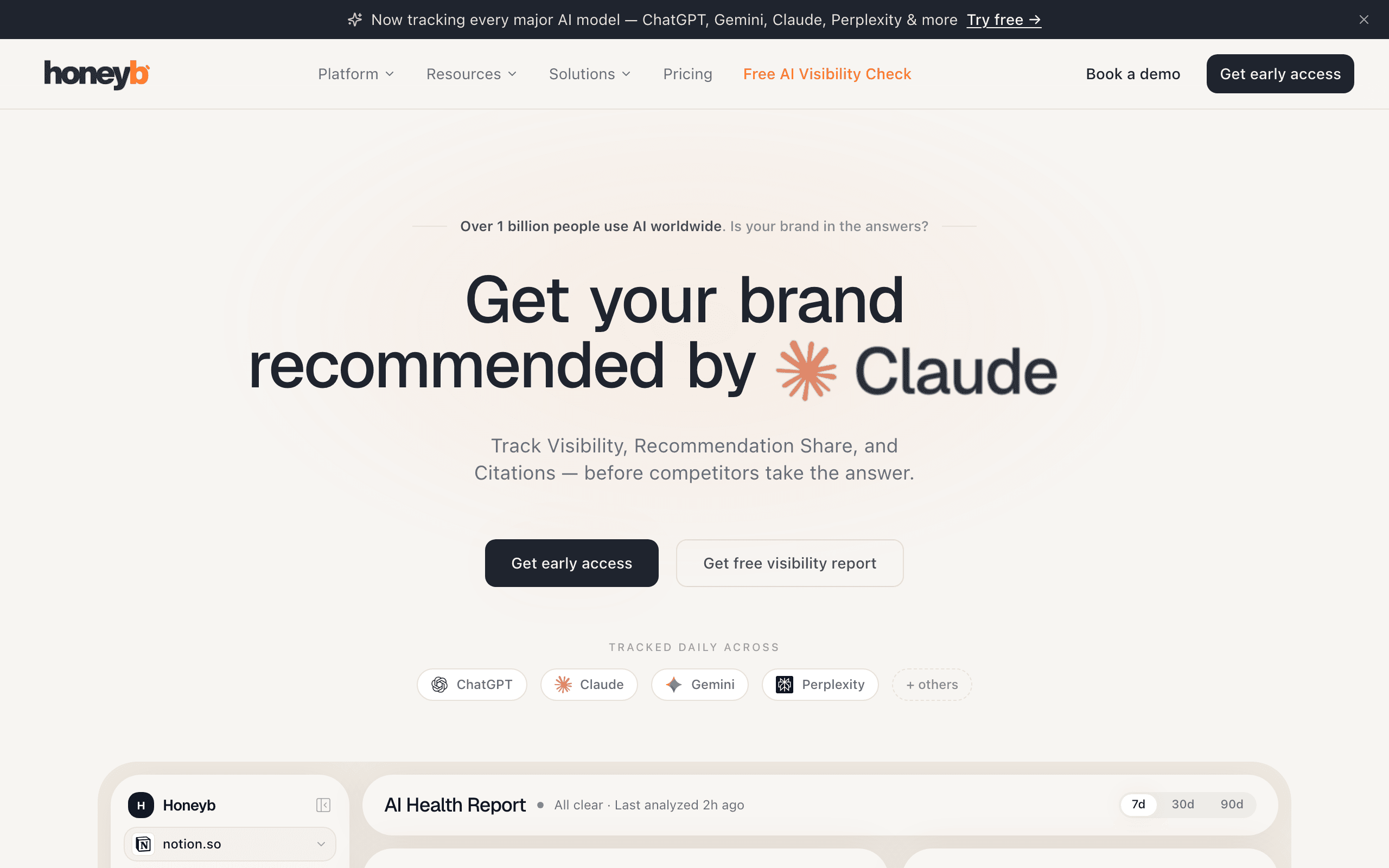
For a wider survey of the category, including traditional rank trackers that have bolted on AI features, see our guide to search engine visibility tools. If you would rather start with data than a reading list, you can run a free AI visibility check and see how the major engines currently describe your brand.
How to choose where to start
| You want to | Start with |
|---|---|
| Try AI search casually | Whatever is already built in: Google AI Mode or Copilot |
| Research with verifiable sources | A dedicated engine such as Perplexity |
| Search without an account or tracking | Duck.ai or Brave Search |
| Know how AI describes your brand | An AI visibility monitoring platform |
Start with whatever is closest, then upgrade deliberately. If the built-in answers feel shallow, try a dedicated engine. If you outgrow the defaults, the 2026 engine ranking compares the candidates in depth. And keep in mind that AI search is the better tool for some tasks and the worse one for others; when to use AI search covers where the line falls.
Frequently asked questions
Are AI search tools free to use? Mostly, yes. ChatGPT, Perplexity, Gemini, Copilot, and Duck.ai all offer free access in a browser. Grok has a rate-limited free tier, with paid capabilities in xAI's SuperGrok tiers. Kagi is the main exception: it is subscription-only, with the Assistant included on every plan.
Do I need to install anything to use AI search? No. Every major engine works as a website. Installation only enters the picture for built-in surfaces, such as Copilot in Windows or Leo in the Brave browser, and for the optional mobile apps most engines publish.
Can I use AI search without creating an account? Yes. Duck.ai gives anonymised access to several models with no account at all, and Brave's AI Answers appear directly in its search results. Several dedicated engines also answer logged-out questions, though an account usually unlocks history and higher usage limits.
Is Google AI Mode the same as AI Overviews? No. AI Overviews are the AI-written summaries that appear automatically above traditional results on many informational queries. AI Mode is a separate conversational tab inside Google Search, reachable as the udm=50 surface, where you choose to chat rather than being shown a summary.
Which AI search tools are growing fastest? ChatGPT remains the clear leader, but the challengers are gaining. Perplexity grew from around 2.7% of generative-AI chatbot usage in early 2024 to 5-6% by April 2026, Claude reached roughly 5% over the same period, and Gemini regained ground after the Gemini 3 launch in November 2025. We track the movements in our AI chatbot market share report.