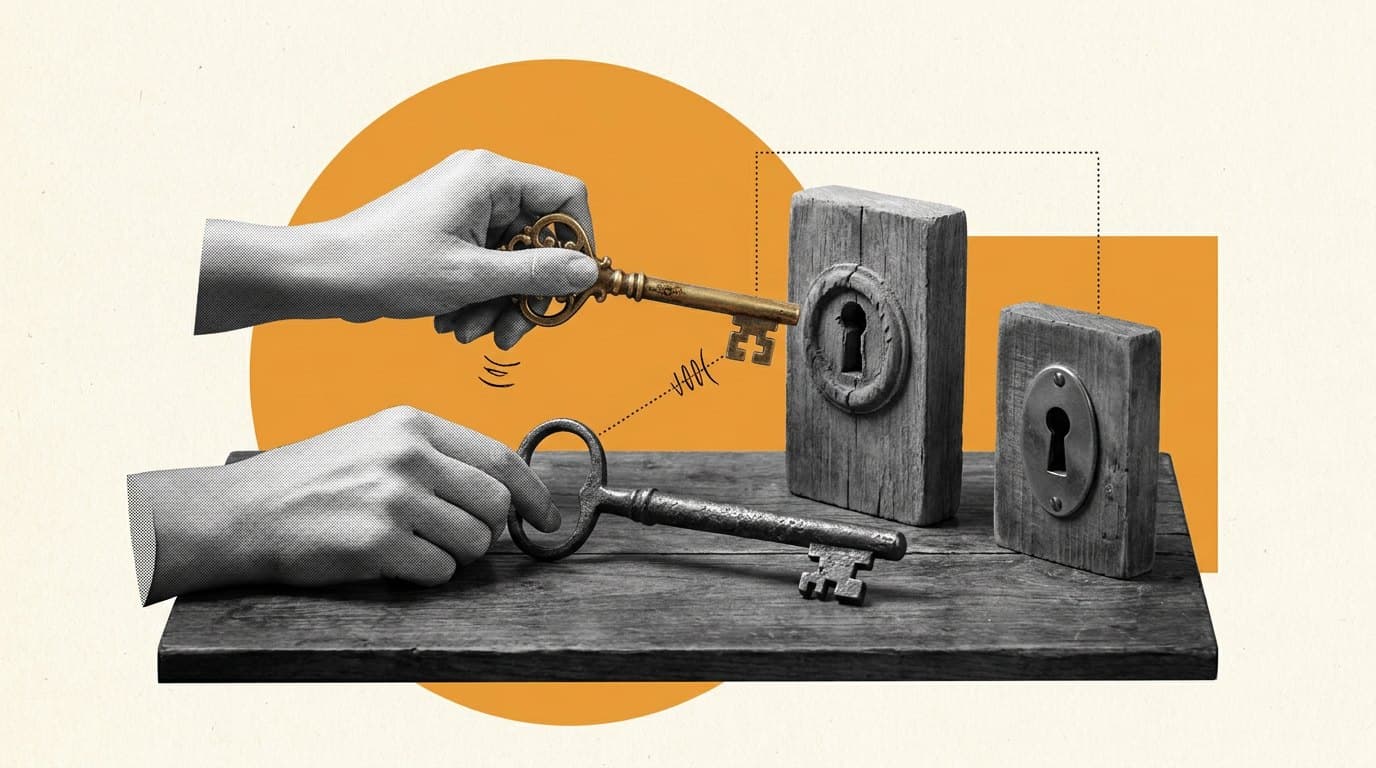
Ahrefs' and Semrush's free AI visibility checkers answer two different, equally important questions. Ahrefs tells you *where* you are mentioned across a wide range of AI engines without asking for your email, making it ideal for a quick pulse check. Semrush, in exchange for a free account, tells you *why* you are mentioned by showing the source pages that feed the AI. Using the right tool for the right job is the difference between a useful insight and a misleading data point.
AI Answer Volatility
~70%
Answer Volatility
The same AI query gives a different answer most of the time.
<1 in 100
Identical Brand Lists
Two identical queries matching the same brand list is rare.
62%
Unnamed Brands
The majority of AI citations do not name a specific brand.
An AI visibility checker is the starting point for answer engine optimisation (AEO, or: getting the robot to name you before it names anyone else). These tools query models like ChatGPT for mentions of your brand, giving you a snapshot of where you stand. But a snapshot is all it is.
Because AI answers are not fixed like traditional search results, a single check can be dangerously misleading. It confirms you exist in the AI's consciousness, but it does not tell you how securely, how often, or in what context you appear.
The Ahrefs Free AI Visibility Checker: Breadth Without Barriers
Ahrefs offers the path of least resistance for a quick brand audit. Their free AI Visibility Checker is built for speed and breadth. You enter a brand name, and without creating an account or even providing an email, it reports on your mentions across five of the most significant platforms: ChatGPT, Gemini, Perplexity, Copilot, and Google AI Overviews. This last one is especially critical, as Google began automatically expanding AI Overviews for many queries in late 2026, according to industry reports, pushing traditional results further down the page.
The primary output is a simple tally of mentions. This is its core strength and its main limitation. It answers 'Am I visible?' with a straightforward yes or no across more free engines than its rival, making it a good first stop for a quick audit. But a mention count without context is just a number.
It does not distinguish between a glowing recommendation and a passing reference in a list of ten competitors. It cannot tell you if you are being praised for your strengths or damned with faint praise.
For that, Ahrefs guides you towards its paid Ahrefs Brand Radar product. In our reading of their pricing page on 2 October 2026, this starts from $199 per month for the AI Visibility Index, or $699 per month for access to all models.
This positions it as a serious enterprise tool, far beyond a simple spot-check. The free tool is a gateway, designed to show you that a conversation is happening, prompting you to pay to find out what is being said. It is a fair and common model, but one that marketers should understand before they begin.
The Semrush Free AI Visibility Tool: Depth for a Price (Your Email)
Semrush takes a different approach. Its free AI Visibility Tool prioritises depth over frictionless access. To use it, you must create and sign into a free Semrush account. Once inside, it reports on mentions across ChatGPT and Gemini, plus a view of which of your pages appear in Google's traditional results. While the engine coverage may be narrower than Ahrefs' free check, the data is richer.
Instead of just a mention count, Semrush provides an 'AI Visibility Score' and, crucially, lists the specific web pages it identifies as the source of your AI citations. This answers the vital next question: 'Why am I being mentioned?' By showing the URLs the AI is learning from, it provides an actionable starting point. You can analyse these pages to see which content earns trust, which third-party reviews are being surfaced, and where competitors are winning citations that should be yours. It turns an abstract problem into a concrete task.
Like Ahrefs, Semrush uses its free tool as an entry point to its paid product, the AI Visibility Toolkit. Our reading of Semrush's pricing page on 2 October 2026 shows the toolkit is included in its SEO + AI Search Starter plan at $199 per month. The price signals a move from a simple check to a full diagnostic suite, with the free tool giving a taste of the power available for continuous monitoring.

Want to get recommended by AI?
Check your AI search visibility, then let the Honeyb agent write, fix, and earn what gets you recommended. Free to start.
Which Free Checker Is Best for Which Job?
The choice between the two free tools depends entirely on the question you are asking. Ahrefs provides a wide, shallow snapshot with no friction, perfect for a quick 'do we exist?' check. Semrush offers a narrower, deeper diagnosis behind a sign-up wall, better for asking 'why do we exist here?'. Neither is a complete solution for managing your AI presence, but used together, they form a powerful initial diagnostic. One tells you there is smoke, the other points you towards the fire.
| Feature | Ahrefs Free AI Visibility Checker | Semrush Free AI Visibility Tool |
|---|---|---|
| Engines Covered | ChatGPT, Gemini, Perplexity, Copilot, AI Overviews (5) | ChatGPT, Gemini, & traditional Google results |
| Sign-up Required | No | Yes, free account required |
| Key Output | Count of brand mentions per engine | AI Visibility Score & list of source URLs |
| Best For | Quick, zero-friction brand presence check | Diagnosing which content is earning citations |
| Paid Upgrade | Ahrefs Brand Radar (AI Index from $199/mo) | Semrush AI Visibility Toolkit (in SEO + AI Search Starter plan, $199/mo) |
Our guide to running a full AI visibility audit shows how to build a systematic programme. For more on the paid alternative, our Semrush AI Visibility Toolkit review has a full breakdown.
How to Combine Both Tools for a First Diagnosis
To make this concrete, imagine a B2B SaaS company, 'AcmeFlow', that sells project management software. A marketer there runs their brand through the Ahrefs checker. The result: three mentions on Perplexity, one on Gemini, and none on ChatGPT or Copilot. This is the 'where'. It is a useful, immediate signal that they exist in the AI's world, but it raises more questions than it answers.
Are the mentions positive? Are they being recommended alongside their main rivals, Asana and Trello, or just listed as a minor alternative? The free check does not say.
Next, the marketer signs up for a free Semrush account and runs the same check. Semrush's tool gives them the 'why'. It reports a low AI Visibility Score but, crucially, it identifies two source URLs driving their mentions: a niche productivity blog's 2024 review and a discussion thread on Reddit. They now have a tangible starting point: update the friendly blog and adopt the language customers are using on Reddit.
This two-step process provides a powerful first diagnostic, but it is still just a single frame from a feature film. The team at AcmeFlow knows where they stood on one Tuesday afternoon.
They do not know if their visibility is trending up or down, whether a competitor just landed a key mention that will be cited for weeks, or what the thousands of other potential customers asking slightly different questions are seeing. This is the gap that free tools, by their nature, cannot fill, and it is why serious teams quickly graduate to continuous monitoring.
Why Free Spot-Checks Are Only a Starting Point
While valuable for an initial look, both free tools share a fundamental limitation: they are spot-checks in a system that demands continuous observation. The answer your customer sees today may not be the one your next customer sees tomorrow, a volatility that makes one-off checks insufficient for managing your brand. A free check tells you if you were mentioned once; it cannot tell you your overall share of voice, track sentiment, or give a true picture of your AI presence.
Your First Step: Get an Instant Baseline
The argument is clear: spot-checks are a starting point, not a strategy. Your first step is to establish that initial baseline. Use our own free AI visibility checker to get an instant, multi-engine report on your brand's visibility and see which answers name you today. It is the first piece of data in a continuous effort.
Sources cited in this report