
The best LLM visibility tool is the one that shows you which sources a model leaned on when it recommended a competitor instead of you, across the engines your buyers use, often enough to see a trend. We compared twelve of them on their own pricing and product pages in October 2026, and monthly plans start at $29, with the cheapest tiers buying you fewer engines, fewer prompts or a slower refresh.
LLM visibility tools (also sold as LLM monitoring, AI brand tracking or, with a straight face, generative engine optimisation suites) send a fixed set of buyer questions to ChatGPT, Gemini, Claude, Perplexity and Google's AI surfaces, then record whether you were named, how you were described and which pages were cited. Honeyb, first on the list, is our own tool, and it is assessed on the same four tests as the other eleven, limits included.
Why the sources matter more than the score
A visibility score tells you that something moved. The sources tell you why, and they are the part you can act on. Reddit was the most-cited domain in Semrush's June 2025 study of about 150,000 AI citations, and Semrush's ghost citations study found that 62 per cent of AI citations never name the brand behind them. In plain terms, a model can recommend your rival on the strength of a forum thread you have never read.
Share of answers citing the domain
Share of AI answers citing each domain
| Item | Share of answers citing the domain |
|---|---|
| 40.1% | |
| Wikipedia | 26.3% |
| YouTube | 23.5% |
The lever sits mostly off your own website. Ahrefs found that brand visibility in AI answers tracks third-party mentions and video more closely than on-page work, so a tool that lists the pages behind each answer hands you an outreach list, while a tool that only counts mentions hands you a number to worry about.
Then there is the noise. SparkToro ran identical prompts through the major assistants again and again and found that AI tools are highly inconsistent when recommending brands: there is under a 1-in-100 chance that two runs return the same list. A weekly check is a sample of one, while daily runs averaged over a fortnight give you a figure you can defend in a board meeting. The stakes keep rising too, since Gartner predicted that traditional search engine volume would drop 25 per cent by 2026 as buyers move their questions to chat assistants.
How we compared them
We judged each tool on four things that decide whether its numbers can be acted on: whether it shows the sources behind each answer, how many engines the entry plan covers, how often it re-runs your prompts, and what it costs. Prices are the monthly-billed US-dollar prices on each vendor's own pricing page, read on 10 October 2026. Peec AI, Semrush and Ahrefs show euros to European visitors, so their US prices come from our reading of the same pages on 2 October 2026. Every screenshot below was captured from the vendor's public website on 10 October 2026.

Want to get recommended by AI?
Check your AI search visibility, then let the Honeyb agent write, fix, and earn what gets you recommended. Free to start.
One finding surprised us. Citation tracking, which separated the leaders from the rest a year ago, is now standard: every tool here reports cited sources in some form. What still separates them is engine coverage on the plan you can afford, how often prompts re-run, and whether you can pull the data out.
| Tool | Best for | Engines on entry plan | Refresh | API | Starting price (monthly) |
|---|---|---|---|---|---|
| Honeyb (ours) | Growing brands that want fixes as well as data | 1 of 8 (all 8 from $199) | Daily | Yes, $0.08 per answer | $29 |
| Profound | Enterprise teams | 3 on the free trial, up to 9 on Enterprise | Daily | Enterprise | Free 7-day trial, then custom |
| Semrush | Existing Semrush users | Google, ChatGPT, Perplexity, Gemini and more | Daily | Advanced plan ($549) | $199 |
| Ahrefs Brand Radar | Existing Ahrefs users | 6 AI surfaces, Claude in the Index | Daily | Yes | Ahrefs plan from $129, Index add-on $199 |
| AthenaHQ | Teams running GEO as a programme | 11 on Starter | Credit-based | Paid add-on | Free plan; $295 |
| Peec AI | Multi-market mid-market brands | 3 of your choice | Daily | Enterprise | $95 |
| SE Ranking | SEO teams and agencies | ChatGPT, Gemini, AI Mode, AI Overviews | Daily | 25K credits on Core | $129 |
| Otterly AI | Small teams on a budget | 4 (Gemini, AI Mode, Claude as add-ons) | Daily | Standard plan ($189) | $29 |
| Scrunch | Brands optimising for AI agents | 4 on Core | Daily | Enterprise | $250 |
| Rankscale | Agencies that want many engines | 17+ engines, credit-based | Hourly to monthly | From Pro+ ($229) | $99 |
| LLMrefs | Keyword-led SEO teams | All major engines | Weekly | Included | $79 |
| LLM Pulse | European teams watching spend | 5 models | Weekly (daily costs more) | From Scale | Not published in USD; confirm at checkout |
The 12 best LLM visibility tools
1. Honeyb (our tool)
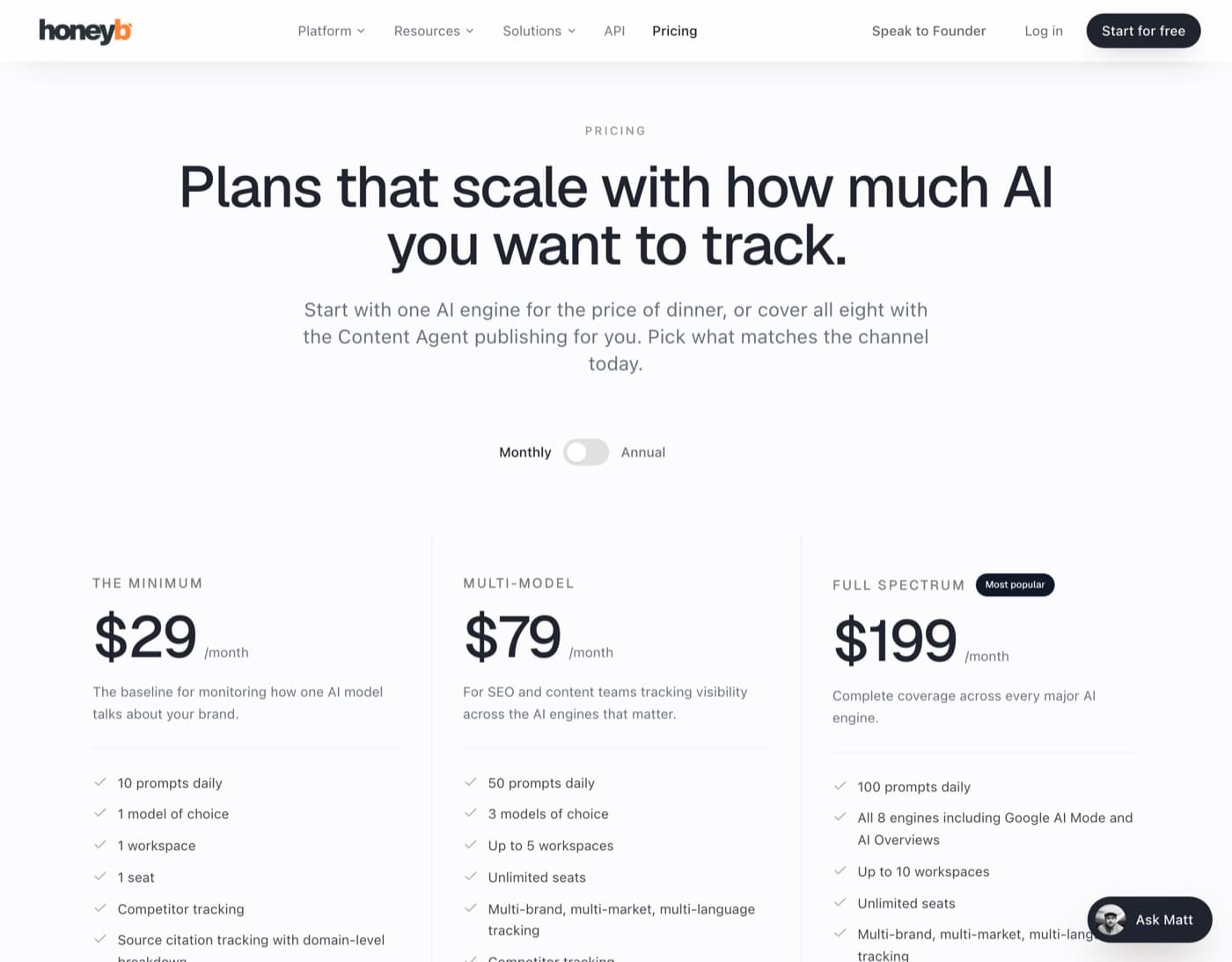
Honeyb runs your buyer questions through up to eight engines (ChatGPT, Gemini, Claude, Perplexity, Google AI Mode, AI Overviews, Grok and DeepSeek) every day, records the pages each answer cites with a domain-level breakdown, and turns the gaps into specific recommendations. The same data is available through an AI visibility API at $0.08 per answer on any plan.
- Best for: growing brands and agencies that want the fix list as well as the numbers.
- Starting price: $29 a month for one engine and 10 daily prompts; $79 for three engines; $199 for all eight. A free AI visibility check needs no card.
- Strength: daily citations across eight engines at a self-serve price, with recommendations attached.
- Limit: the $29 plan covers a single engine and has no trial, and Honeyb is a younger company with a smaller customer base than Profound or Semrush.
2. Profound
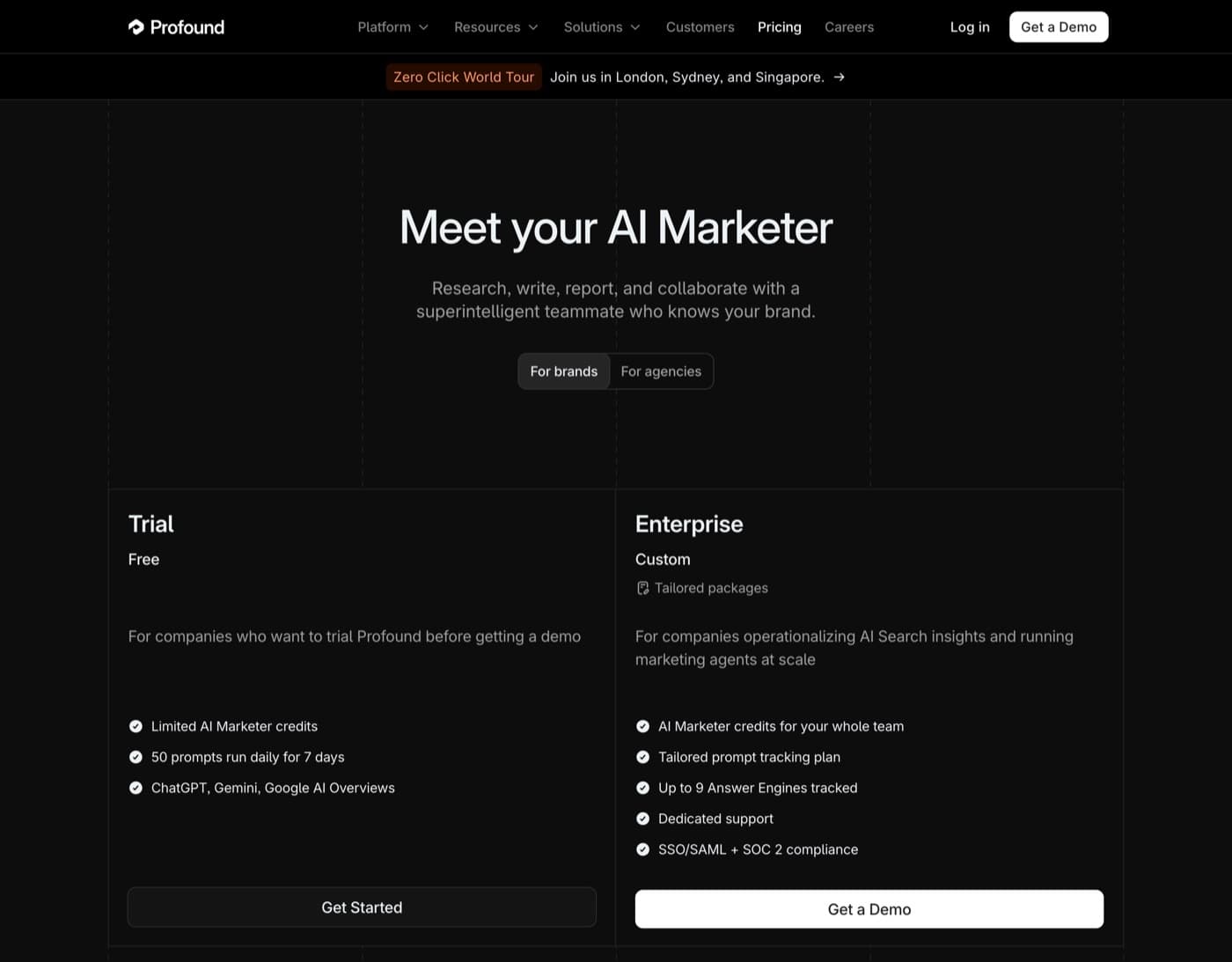
Profound is the enterprise standard, with the deepest analytics in the category and SSO and SOC 2 compliance for procurement teams. It has recently repositioned around an 'AI Marketer' agent that researches and writes as well as reports. See Honeyb vs Profound for the side-by-side.
- Best for: large brands with a procurement process and many markets to watch.
- Starting price: no public price. A free trial runs 50 prompts daily for seven days; Enterprise is custom.
- Strength: up to nine answer engines on Enterprise, with the most thorough citation and prompt analysis here.
- Limit: the trial cannot be customised, and everything beyond it means a sales conversation.
3. Semrush AI Visibility
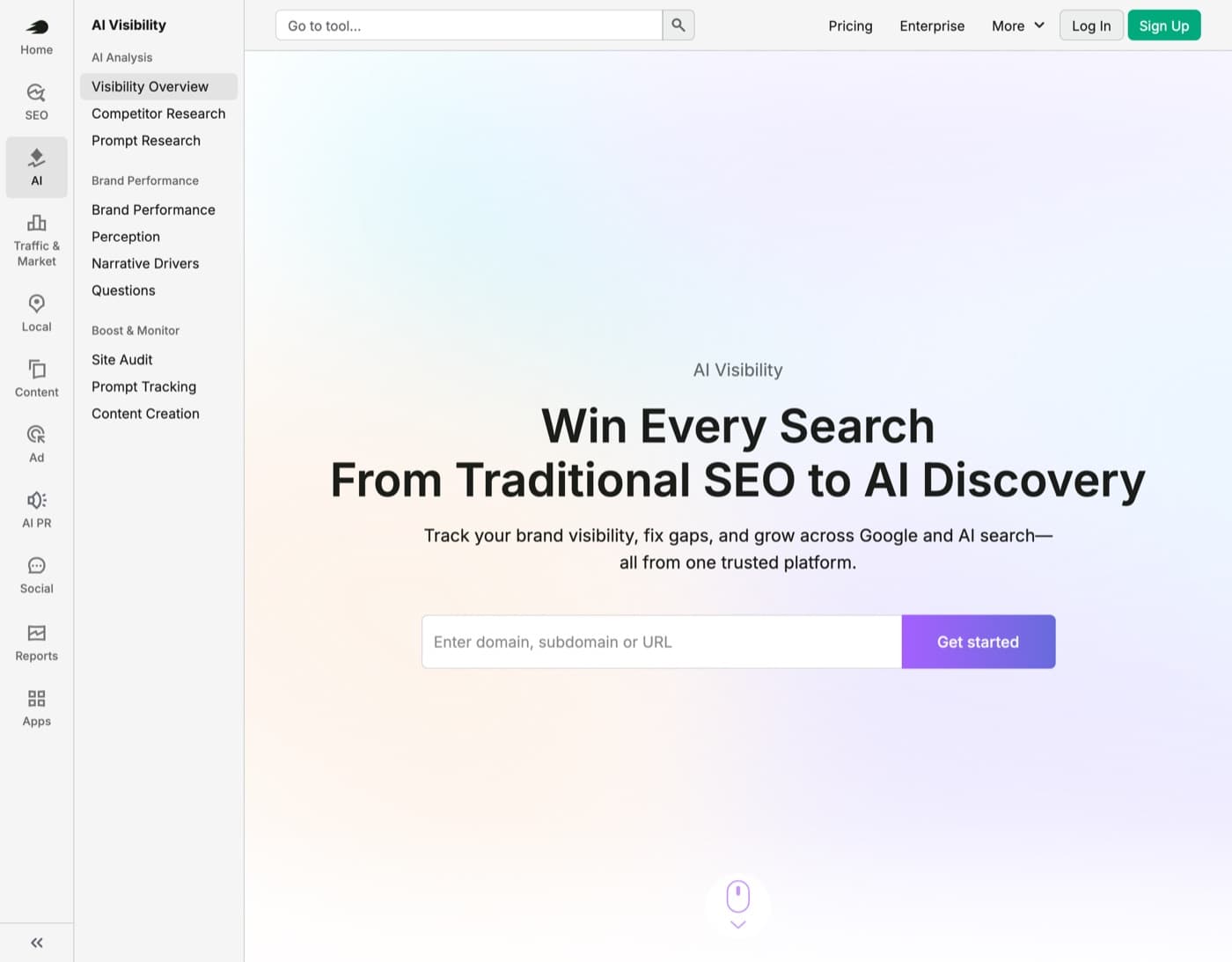
Semrush folds AI visibility into its SEO suite. The SEO + AI Search plans track prompts daily across Google, ChatGPT, Perplexity, Gemini and more, next to the keyword and backlink data most SEO teams already use.
- Best for: teams already paying for Semrush.
- Starting price: $199 a month for Starter (50 prompts tracked daily), US price read 2 October 2026. Semrush also runs a free AI search visibility checker.
- Strength: AI visibility, sentiment and site audit in the login you already have.
- Limit: API access waits until the $549 Advanced plan, and 50 prompts is a small sample for a volatile channel.
4. Ahrefs Brand Radar
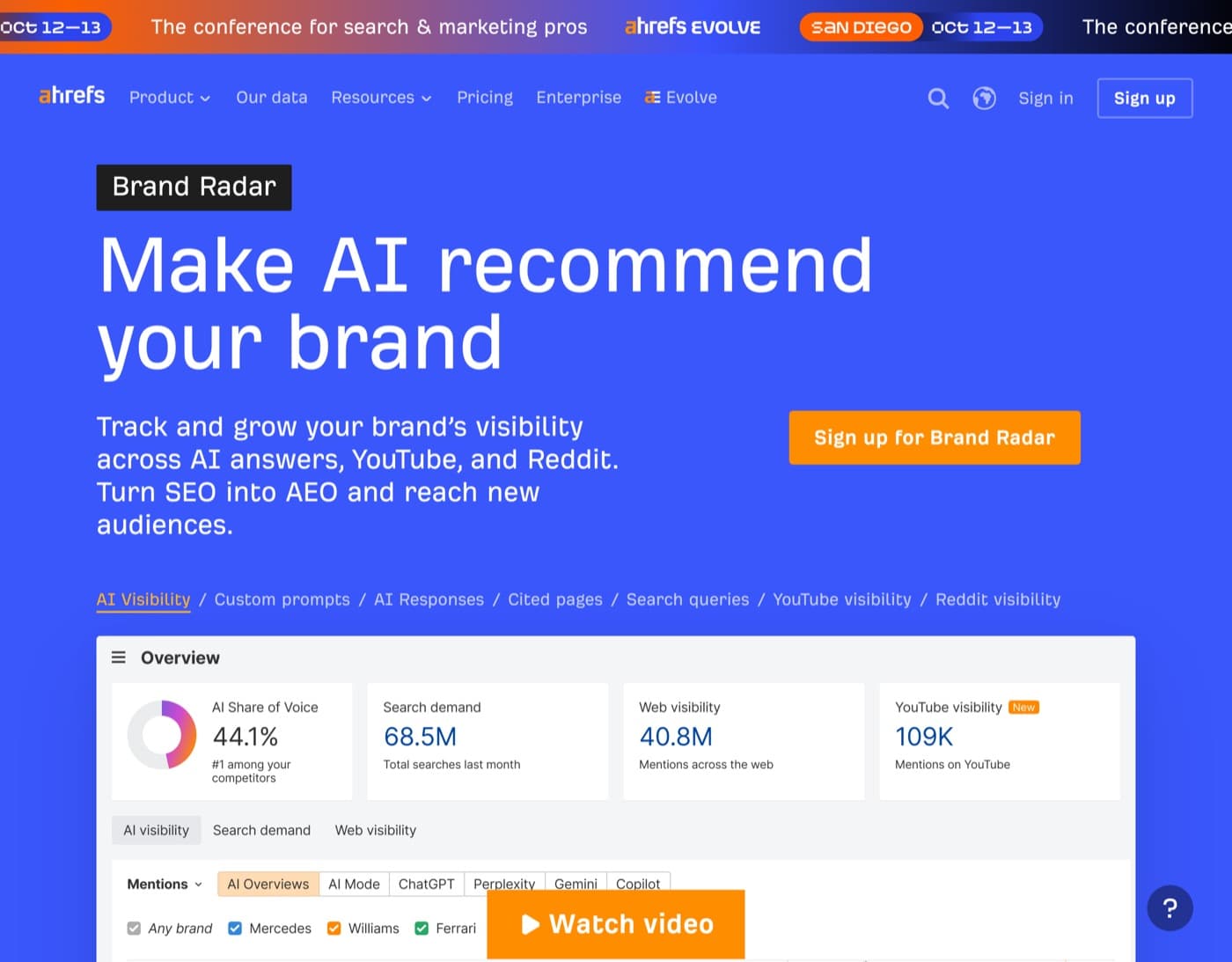
Ahrefs Brand Radar measures AI share of voice and cited pages across AI Overviews, AI Mode, ChatGPT, Perplexity, Gemini and Copilot, and sets them beside Ahrefs' web, YouTube and Reddit mention data. A Brand Radar API exposes the data.
- Best for: teams already on Ahrefs who want AI and web mentions in one place.
- Starting price: custom prompts come with paid Ahrefs plans (Lite is $129 a month); the full AI Visibility Index is a $199 a month add-on. US prices read 2 October 2026.
- Strength: the widest view of off-site mentions, which is where AI visibility is won.
- Limit: the real cost is the Ahrefs plan plus the add-on, and Claude is only in the Index.
5. AthenaHQ
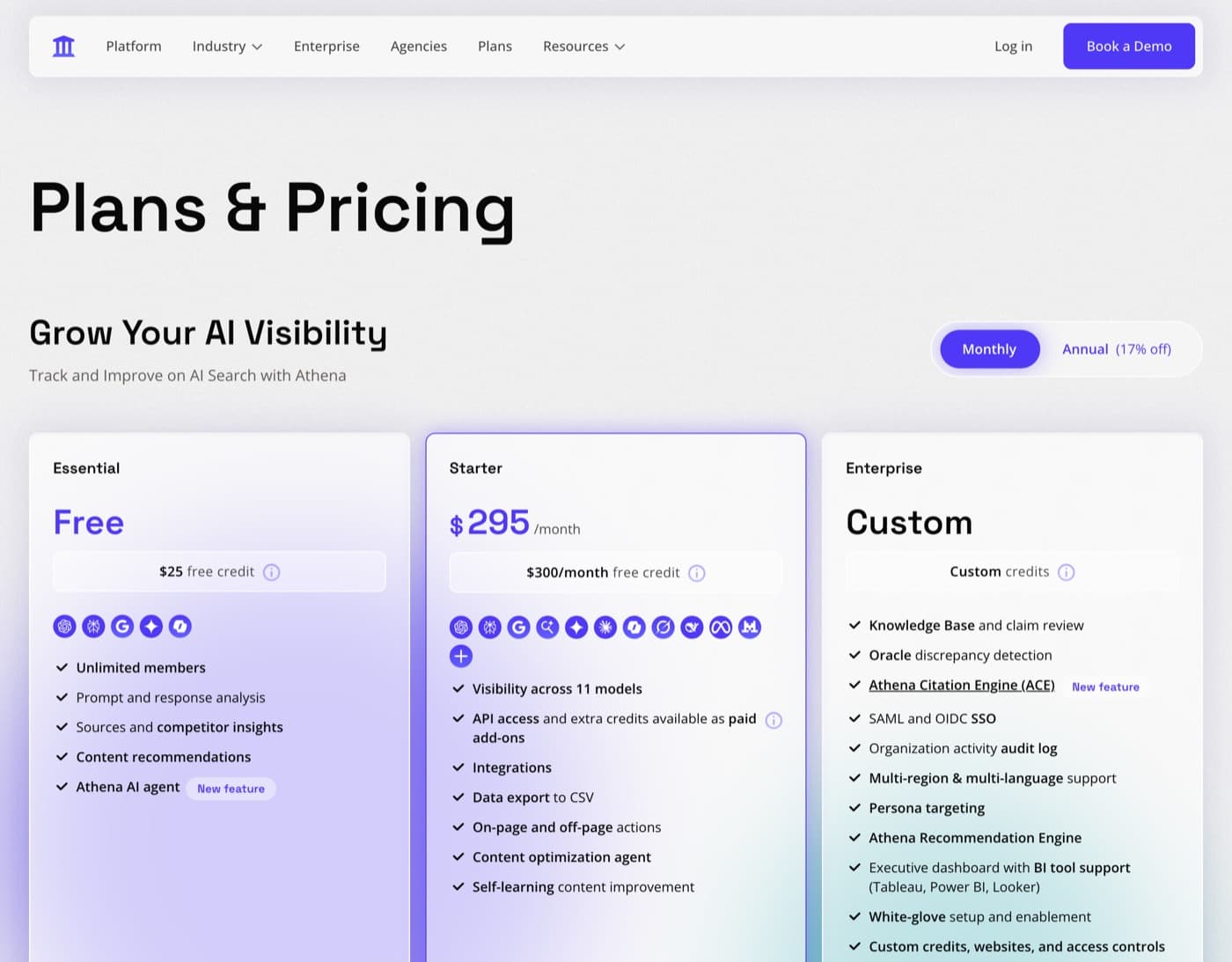
AthenaHQ wraps monitoring in generative engine optimisation workflows: prompt and response analysis, source and competitor insights, a content optimisation agent and on-page and off-page actions.
- Best for: marketing teams and agencies running GEO as an ongoing programme.
- Starting price: a free Essential plan with $25 of credit; Starter is $295 a month with 3,600 credits (one credit is one AI response) across 11 models.
- Strength: the broadest engine list on a published plan, with a genuine free tier.
- Limit: API access and extra credits are paid add-ons with prices on request.
6. Peec AI
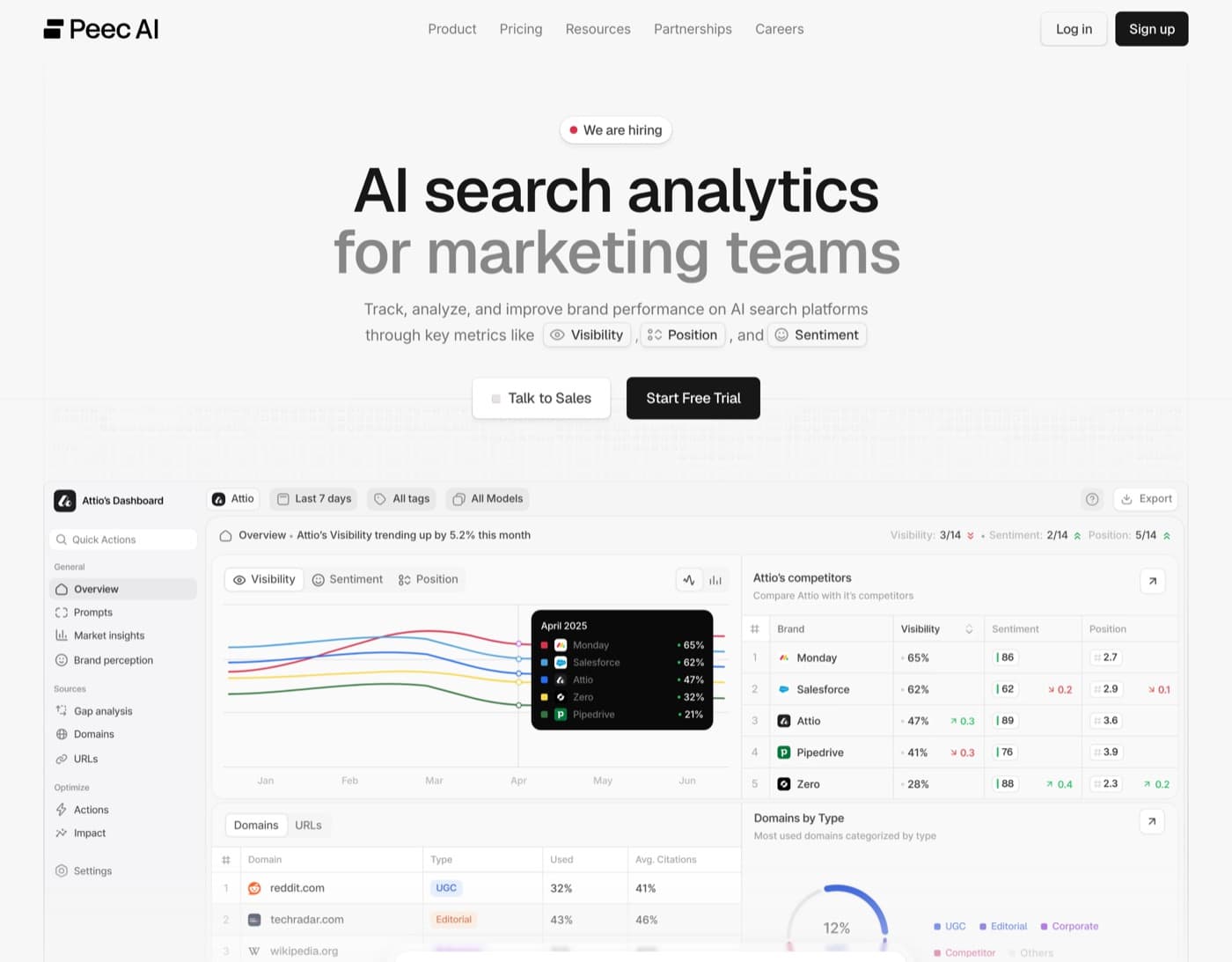
Peec AI is a clean, fast analytics tool with strong multi-country and multilingual coverage. Its dashboard lists the domains and URLs behind each answer, with a gap analysis view, and it allows unlimited users on every plan.
- Best for: mid-market brands selling in more than one language or market.
- Starting price: $95 a month for 50 prompts on three models of your choice, tracked daily (US price read 2 October 2026).
- Strength: well-designed reporting and unlimited seats.
- Limit: three models per plan, and API access is reserved for Enterprise.
7. SE Ranking
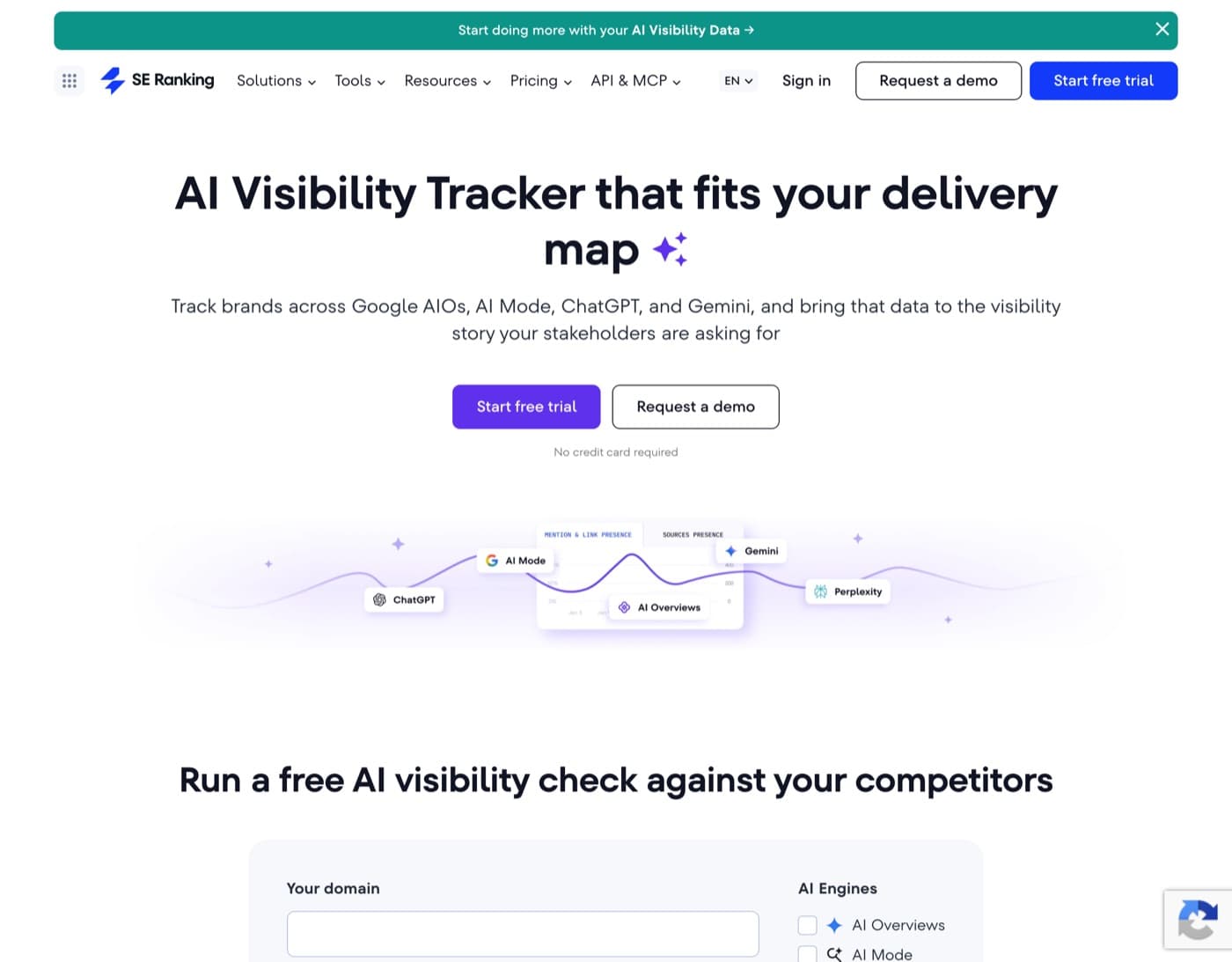
SE Ranking adds AI visibility tracking, with mention, link and source presence, to an established and affordable SEO platform. The Core plan includes 100 prompts tracked daily, 25,000 API credits and MCP access.
- Best for: SEO teams and agencies that want AI data next to their rankings.
- Starting price: $129 a month on Core ($103.20 billed annually), with a 14-day trial that needs no card.
- Strength: the most generous API allowance at this price.
- Limit: an SEO suite first, so AI analysis is lighter than in the specialist tools, and extra prompts mean an $89 add-on.
8. Otterly AI
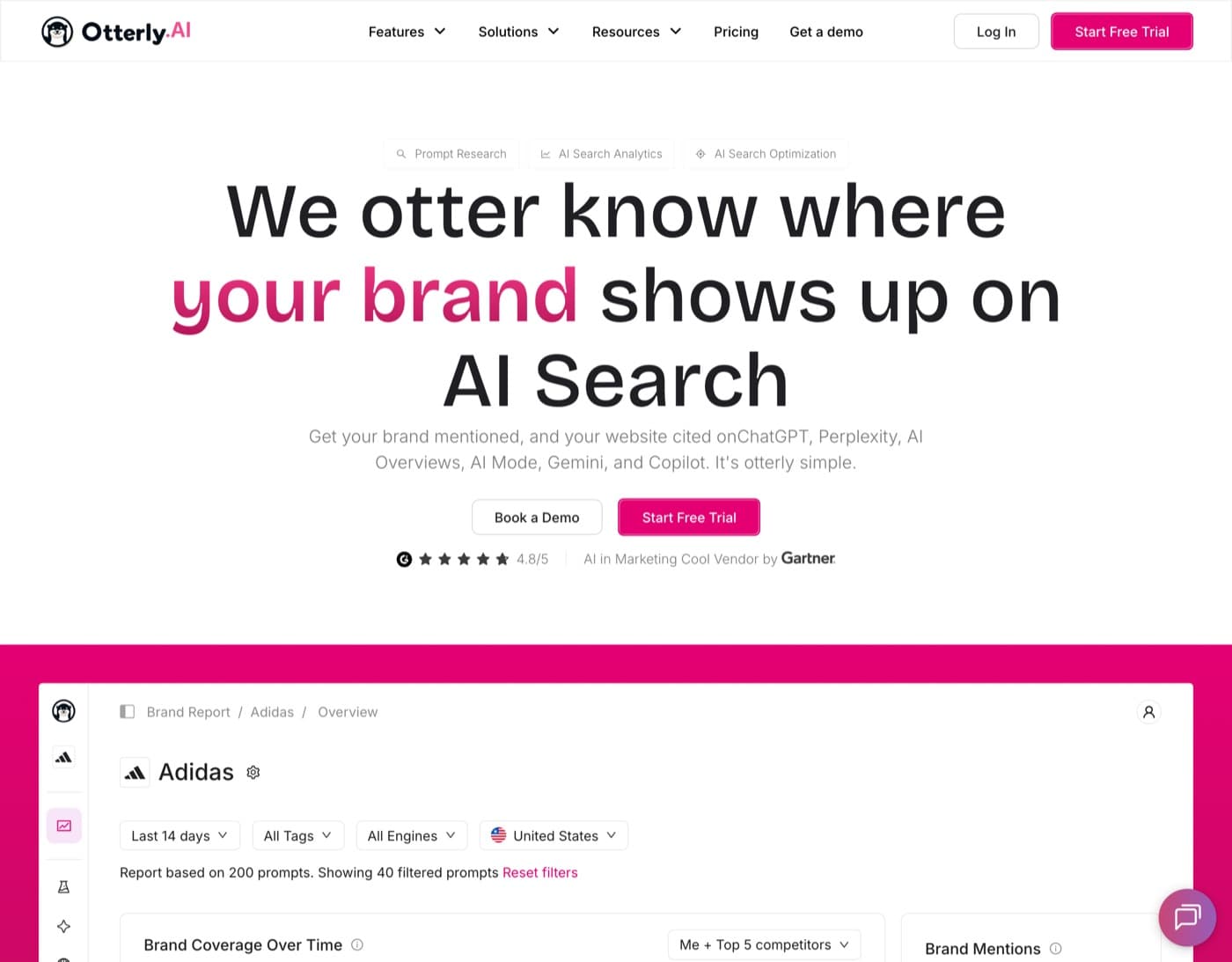
Otterly AI is the low-cost door into the category, a Gartner Cool Vendor that tracks brand mentions and cited links across ChatGPT, Google AI Overviews, Perplexity and Microsoft Copilot, with Gemini, AI Mode and Claude sold as add-ons.
- Best for: small teams and solo marketers.
- Starting price: $29 a month for 15 prompts on four engines, with a free trial (pricing).
- Strength: the lowest entry price here for four engines.
- Limit: 15 prompts is a thin sample, and API access starts on the $189 Standard plan.
9. Scrunch
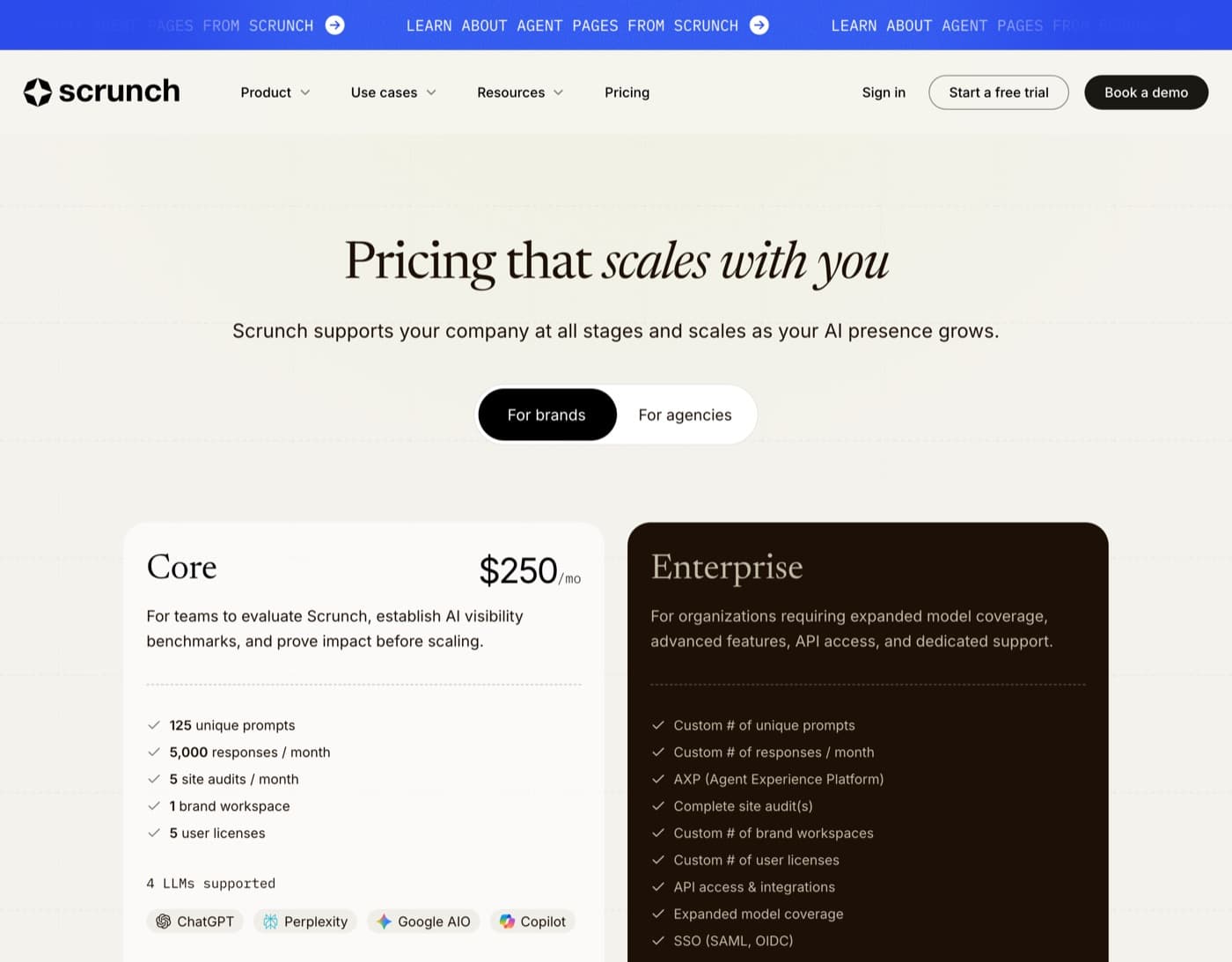
Scrunch monitors brand presence and pairs it with site audits and page optimisations aimed at making your site legible to AI agents, which it calls agent experience.
- Best for: brands that care how AI agents read their site as much as how chat answers rank them.
- Starting price: $250 a month for 125 prompts, 5,000 responses and five site audits, with a free trial.
- Strength: monitoring and site fixes in one subscription.
- Limit: Core covers four engines; Claude, Gemini, AI Mode and the API are Enterprise-only.
10. Rankscale
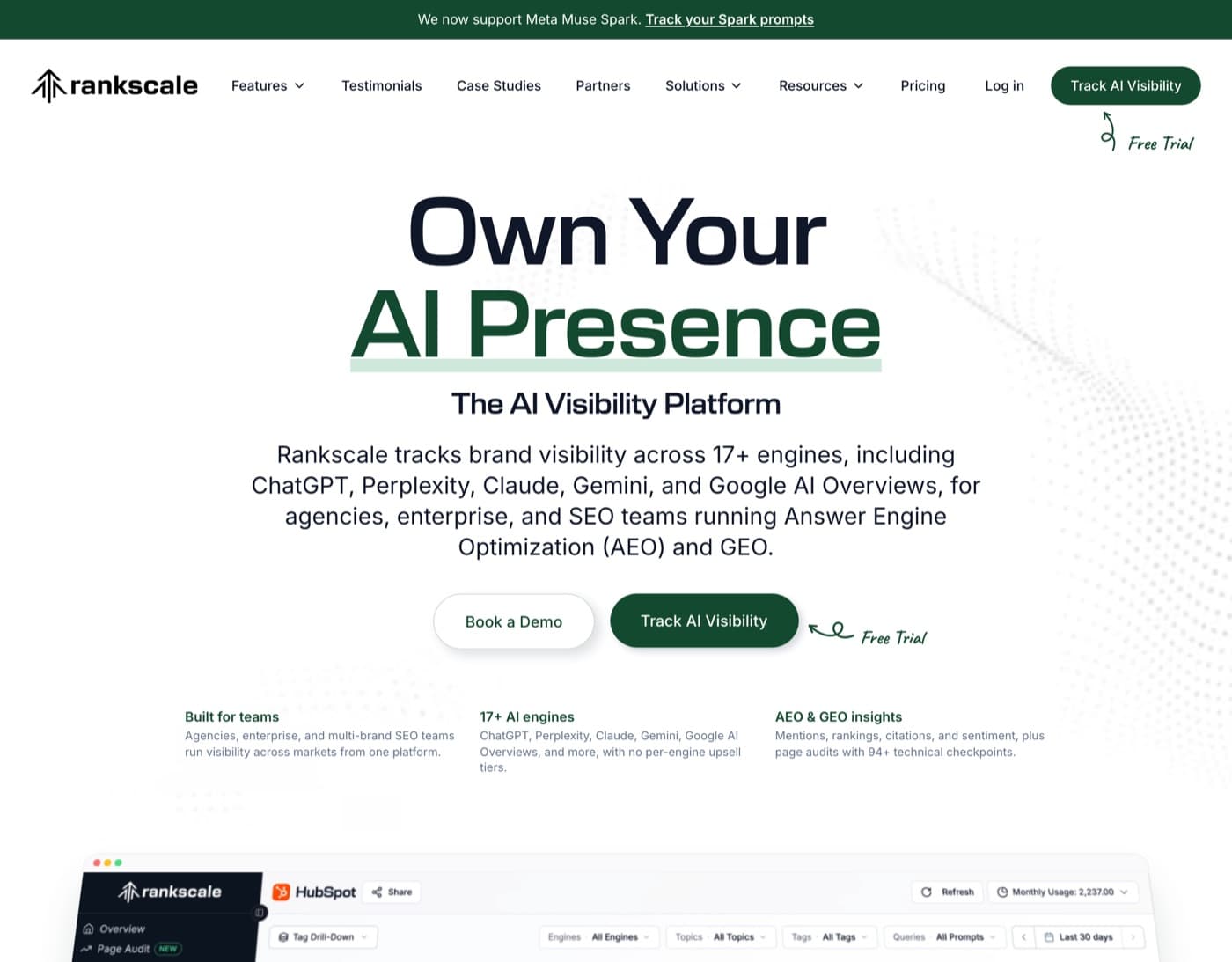
Rankscale tracks visibility, rankings, citations and sentiment across more than 17 engines on a credit model, with schedules you can set from hourly to monthly and shopping and ad analysis in ChatGPT, AI Mode and Copilot.
- Best for: agencies and SEO teams that want breadth of engines without per-engine upsells.
- Starting price: Pro is $99 a month with 1,200 credits and a seven-day free trial; an annual-only Essentials tier sits below it (pricing).
- Strength: the widest engine list here and flexible scheduling.
- Limit: credits run down faster than you expect when you add engines, and the REST API starts on the $229 Pro+ plan.
11. LLMrefs
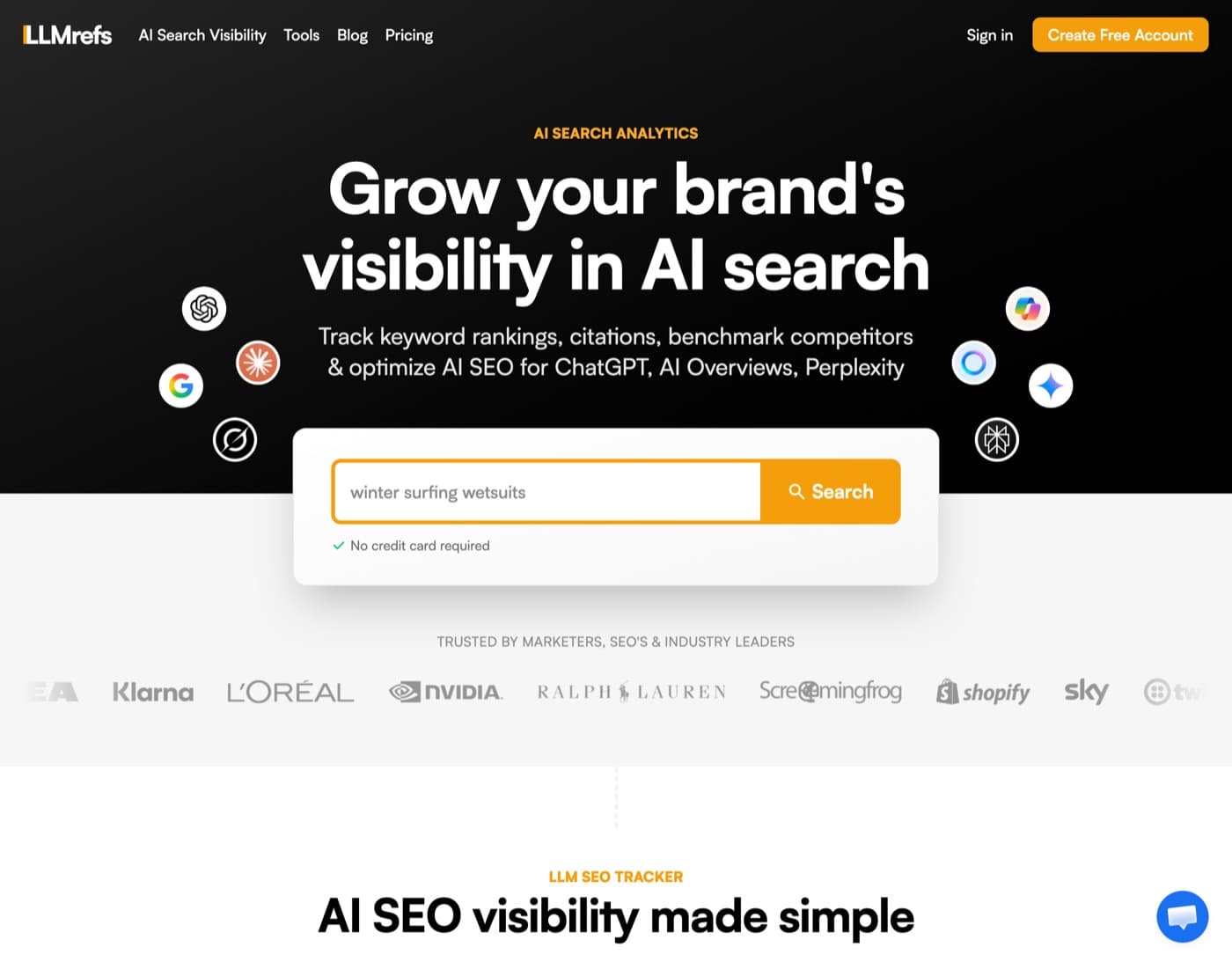
LLMrefs starts from keywords rather than prompts: you enter the terms you already rank for and it generates and tracks the conversational questions behind them, with citation tracking and geo-targeting in 50+ countries.
- Best for: SEO teams who think in keywords and want one flat price.
- Starting price: $79 a month for 500 prompts, unlimited projects and API access, which the page labels a limited-time price, with a seven-day free trial and a free account.
- Strength: a large prompt allowance and every engine for one fee.
- Limit: reports refresh weekly, which is slow for a channel that changes this often.
12. LLM Pulse
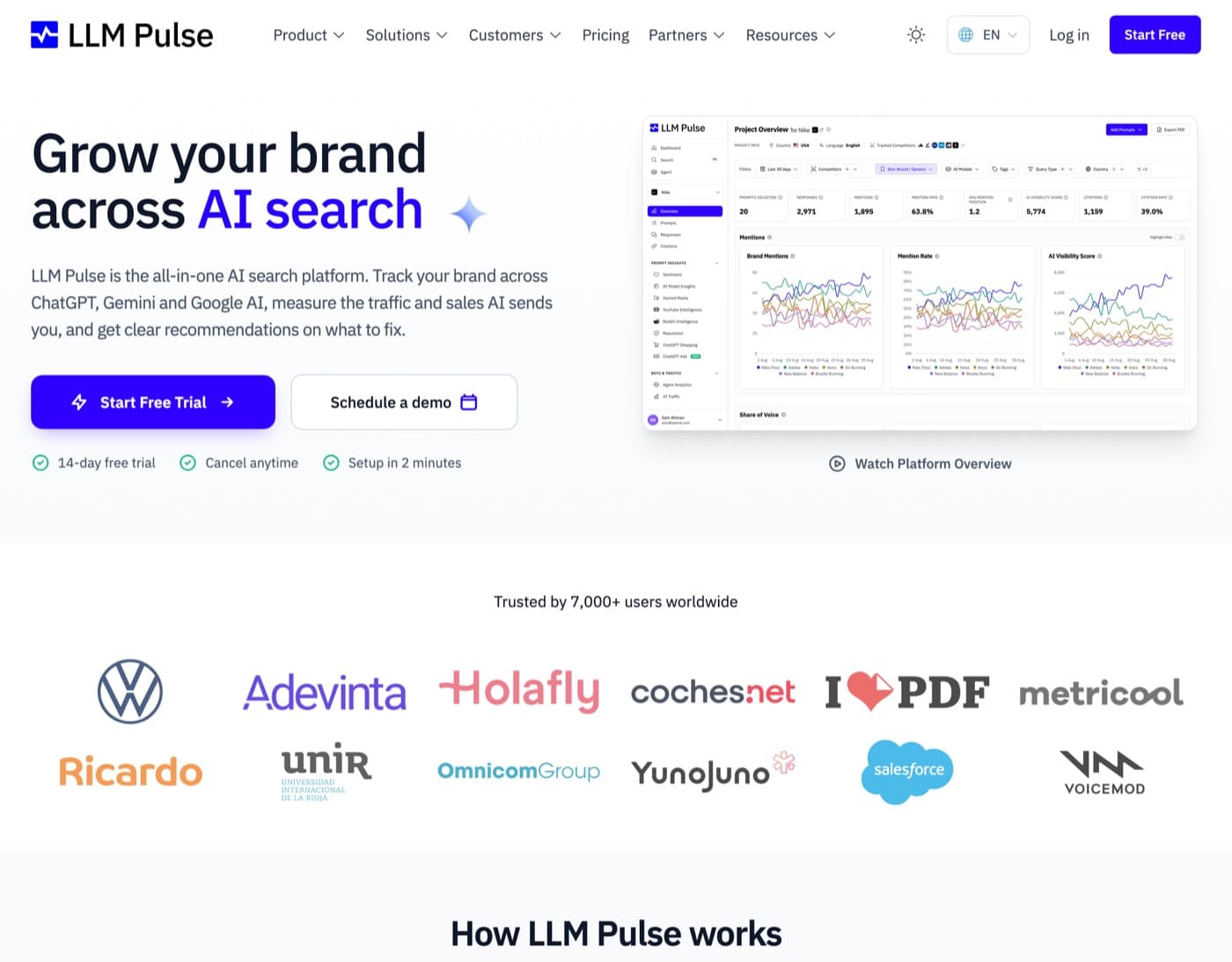
LLM Pulse is a European tool that tracks visibility, share of voice, mentions and citations across five models on every plan, with recommendations and a GEO writer included.
- Best for: budget-conscious teams that are happy with weekly data.
- Starting price: the entry plan tracks 50 prompts weekly, and daily tracking costs more; the dollar price is not shown outside the US, so confirm it on the pricing page.
- Strength: five models on the entry plan with no add-on fees.
- Limit: priced in euros, weekly by default, and the API waits until the Scale plan.
Which LLM visibility tool to pick
Start from the question you need answered. If you want daily citations across many engines with recommendations attached at a self-serve price, Honeyb is built for that, and AthenaHQ is the strongest alternative if you want a heavier GEO workflow. If you are an enterprise that will buy through procurement, Profound is the deepest. If you already pay for Semrush, Ahrefs or SE Ranking, their AI modules save a second login. If the budget is tight, Otterly and LLMrefs are the cheapest serious options, and Rankscale gives the most engines per dollar.
Whatever you choose, judge it on the sources it shows you and on how often it samples. A tool that reports a single visibility number once a week is measuring weather; one that runs a fixed set of buyer questions every day and lists the pages behind each answer is giving you a plan.
See where you stand today with a free AI visibility check, and for the wider roundup read the best AI brand monitoring tools and the best ChatGPT brand monitoring tools.
Sources cited in this report