
Search Atlas sells a tempting promise: hand one platform a small piece of JavaScript and let it fix your SEO while you sleep. That piece of JavaScript is OTTO, the platform's autopilot agent (it applies changes for you rather than just telling you what to change), and it will rewrite your page titles, inject structured data and add internal links without you ever opening the CMS. When it works, it is genuinely useful. The catch is that the same pixel that makes it convenient is the one that, in documented cases, has broken sitemaps and pushed pages out of Google's index. So the real question is not whether Search Atlas is clever. It is whether automation-by-default is the trade you want, and whether the parts you actually pay for justify a bill that runs from $99 to $999 a month.
This review covers what Search Atlas is, what each tier costs (prices re-checked against the live pricing page in July 2026), where OTTO earns its keep and where the all-in-one model bites back, and how well it does the one job a growing number of buyers now shop for: AI visibility, meaning whether ChatGPT, Gemini, Perplexity and the rest name and cite your brand when a customer asks. Honeyb, the tool behind this blog, is a dedicated AI visibility monitor, so we have a stake in that last question and say so where it comes up. Everywhere else we have kept the ledger honest and named the trade-offs both ways.
The verdict, up front
For a small agency or in-house team that wants research, content, technical execution and paid ads under one login, and will supervise the automation rather than trust it blind, Search Atlas is a credible all-in-one platform and the breadth is real. For a buyer who wants one narrow job done cleanly and kept in their own codebase, a focused tool will usually do that single job better and at lower risk. And if the specific job is AI visibility, note two things up front: the full five-engine tracking sits on the $399 Pro tier rather than the entry plan, and it is one module inside a far broader suite rather than a specialist monitor.
What Search Atlas is
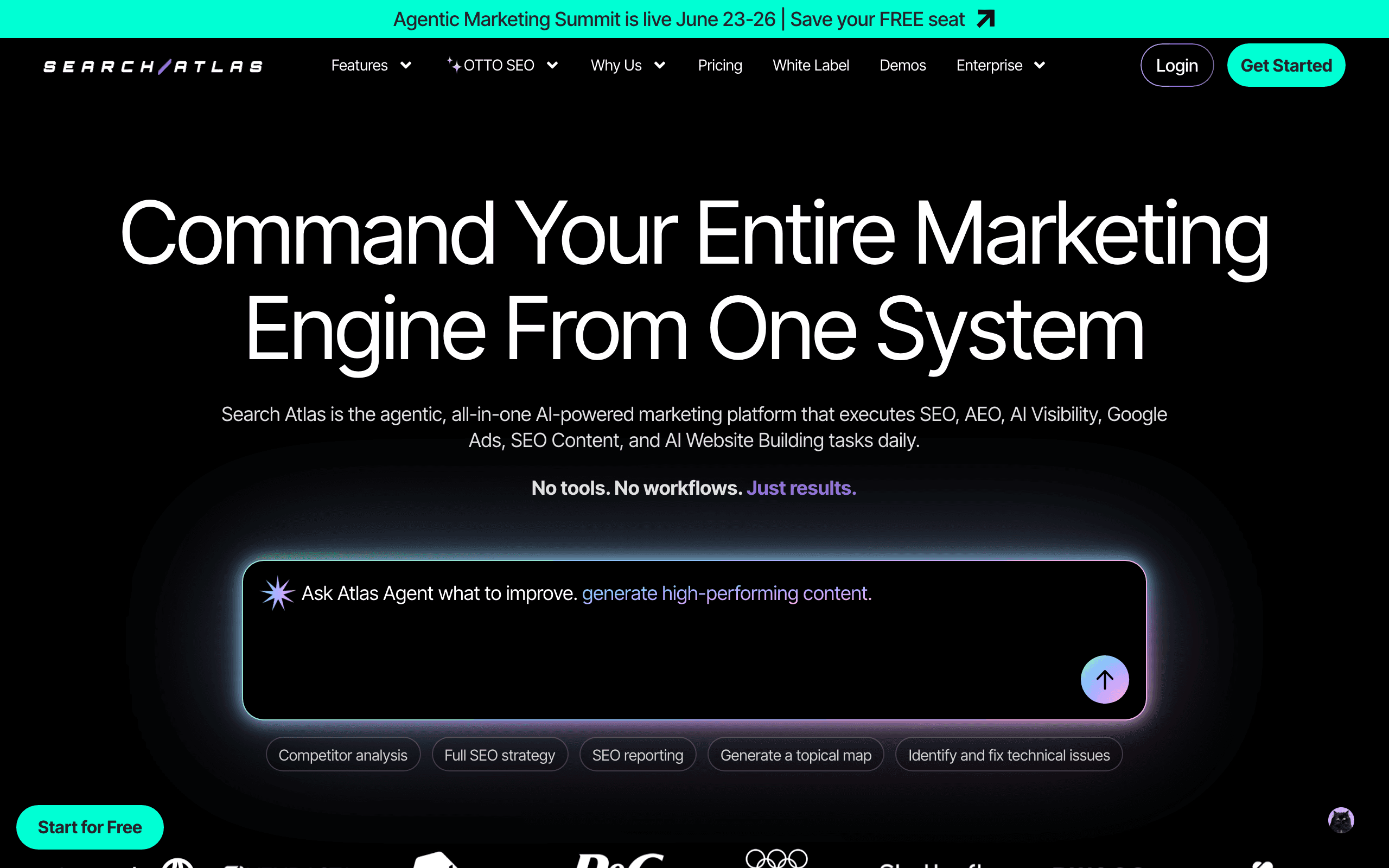
Search Atlas describes itself as an agentic, all-in-one organic marketing platform: research, on-page SEO, answer engine optimisation (AEO, the practice of getting AI answer engines to name you), AI visibility tracking, Google Ads, content and even website building, all in one login. Its own tagline puts it plainly, promising software "priced like a coworker, not a tool stack". Rather than a research tool you act on manually, it positions itself as a platform that does the work for you.
The centrepiece is OTTO SEO. You install a lightweight pixel (a small piece of JavaScript that sits in your site's head), OTTO scans for issues, and it can then deploy approved changes to metadata, schema markup, internal links and on-page content through that layer rather than editing your source files directly. Around it sit a long list of modules: Content Genius and SCHOLAR for AI writing and content grading, Smart Ads (its OTTO PPC agent) for paid campaigns, GBP Galactic for Google Business Profile automation, an Atlas Agent conversational interface, a Website Studio for page generation, and an LLM Visibility module for AI answer tracking. For a team that wants research, content and technical execution under one roof, the surface area is genuinely large.
What Search Atlas costs in 2026
Pricing on the official site runs across four monthly tiers, with a seven-day free trial, free one-to-one onboarding and a discount on annual billing. The figures below were taken from the live pricing page in July 2026; software pricing changes often, so confirm before you buy (Search Atlas pricing).
| Plan | Price (per month) | LLM visibility included | Best suited to |
|---|---|---|---|
| Starter | $99 | None | A solo site running core SEO and OTTO fixes |
| Growth | $199 | 3,500 credits, 3 engines (ChatGPT, Gemini, Google AI Mode) | A small team adding light AI answer tracking |
| Pro | $399 | 20,000 credits, 5 engines (adds Copilot, Perplexity) | Agencies wanting full-engine coverage and client reporting |
| Agency | $999 | 50,000 credits, 5 engines | High-volume agencies tracking many brands at once |
The pricing detail buyers most often miss is on that third column. The AI visibility many people are really shopping for, tracking across ChatGPT, Gemini, Google AI Mode, Copilot and Perplexity, only reaches full five-engine coverage at the $399 Pro tier. The $199 Growth plan covers three engines, and the entry Starter plan does not include LLM visibility credits at all. So the feature that can look like an entry-level perk is in practice a mid-to-upper-tier one, bundled inside a suite you are also paying for research, content and ads to run.
The module map: what you actually get
It helps to separate the platform into the jobs it does, because the breadth is the whole pitch and also the whole trade-off. The table groups the main modules by the task they cover.
| The job | Search Atlas module | What it does |
|---|---|---|
| On-page and technical execution | OTTO SEO | Deploys metadata, schema and internal-link changes through a JavaScript pixel |
| Content | Content Genius, SCHOLAR | AI drafting, semantic editing and a content grader that scores drafts |
| Local | GBP Galactic, Local Citations | Google Business Profile automation and local citation building |
| Paid search | Smart Ads (OTTO PPC) | Builds and manages Google Ads campaigns |
| Links | Link Building, Backlink Analyzer | Backlink analysis and outreach tooling |
| AI answers | LLM Visibility | Tracks brand mentions and citations across AI answer engines |
Where OTTO earns its keep, and where it bites
The appeal of OTTO is real. For a small team without a developer on call, having metadata, schema and internal links deployed through a pixel removes a genuine bottleneck, and the changes go live without a release cycle. For an agency juggling many client sites, doing that work once inside one dashboard is a plausible time-saver, and the white-label reporting on the higher tiers fits client work.









Want to get recommended by AI?
Check your AI search visibility, then let the Honeyb agent write, fix, and earn what gets you recommended. Free to start.
The all-in-one model has trade-offs, though, and independent reviews are worth reading before you commit. A neutral review by eesel AI documents users who hit technical problems after deploying the OTTO pixel, including a broken sitemap, slower load times and de-indexed pages that directly affected rankings (eesel AI review). Because changes are injected through a layer on top of your site rather than written into source, when something breaks the cause is harder to trace and you are reliant on the platform staying healthy. The mitigation is straightforward: test OTTO on a staging site first, start with low-risk changes, and keep a rollback within reach.
The breadth cuts both ways elsewhere too. Features such as Authority Builder and Cloud Stacks involve acquiring backlinks and generating linking content on cloud platforms, tactics that sit uncomfortably against Google's link spam guidance, so white-hat teams may prefer to leave them switched off. Reviewers also describe a steep learning curve, because the same surface area that makes the platform powerful makes it dense for a newcomer. None of this makes Search Atlas a poor product. It means it suits teams who want execution-heavy automation and will supervise it closely, not buyers who want a single narrow job done cleanly and kept in their own stack.
The AI visibility question
This is the job Search Atlas touches with its LLM Visibility module but does not specialise in, and it is the one growing fastest. AI answer engines do not return ten blue links. They synthesise a reply and cite a small handful of sources, and the thing that most moves whether they name you is not on-page tinkering. Ahrefs' analysis of AI visibility found it correlates most strongly with third-party mentions and video, the coverage other people publish about you, rather than with the on-page work OTTO automates. In other words, a pixel can tidy your title tags, but it cannot make Reddit or a review site talk about you, and Reddit alone is the single most-cited source in AI answers at 40.1% of all citations (Semrush).
There is a second reason a specialist tool matters here: AI answers are unstable. Semrush found that 62% of AI citations never name the brand at all, and SparkToro found the same query changes its answer roughly 70% of the time, with two identical queries matching the same brand list less than one time in a hundred. A number you check once is close to meaningless. That is why scheduled measurement, not a one-off look, is the point, and it is why spot-checking a chatbot by hand will not tell you what you need to know. Understanding how AI models choose which brands to recommend is the strategic layer underneath all of this.
It is also worth weighing on price. Dedicated AI visibility monitors start well below the tier at which Search Atlas unlocks full engine coverage, because tracking is all they do. The chart shows entry prices for the specialist monitors; Search Atlas is not on it because it is a broad suite, not a dedicated tracker, and its five-engine coverage begins at $399.
Entry price
Entry-tier price of AI brand monitoring tools
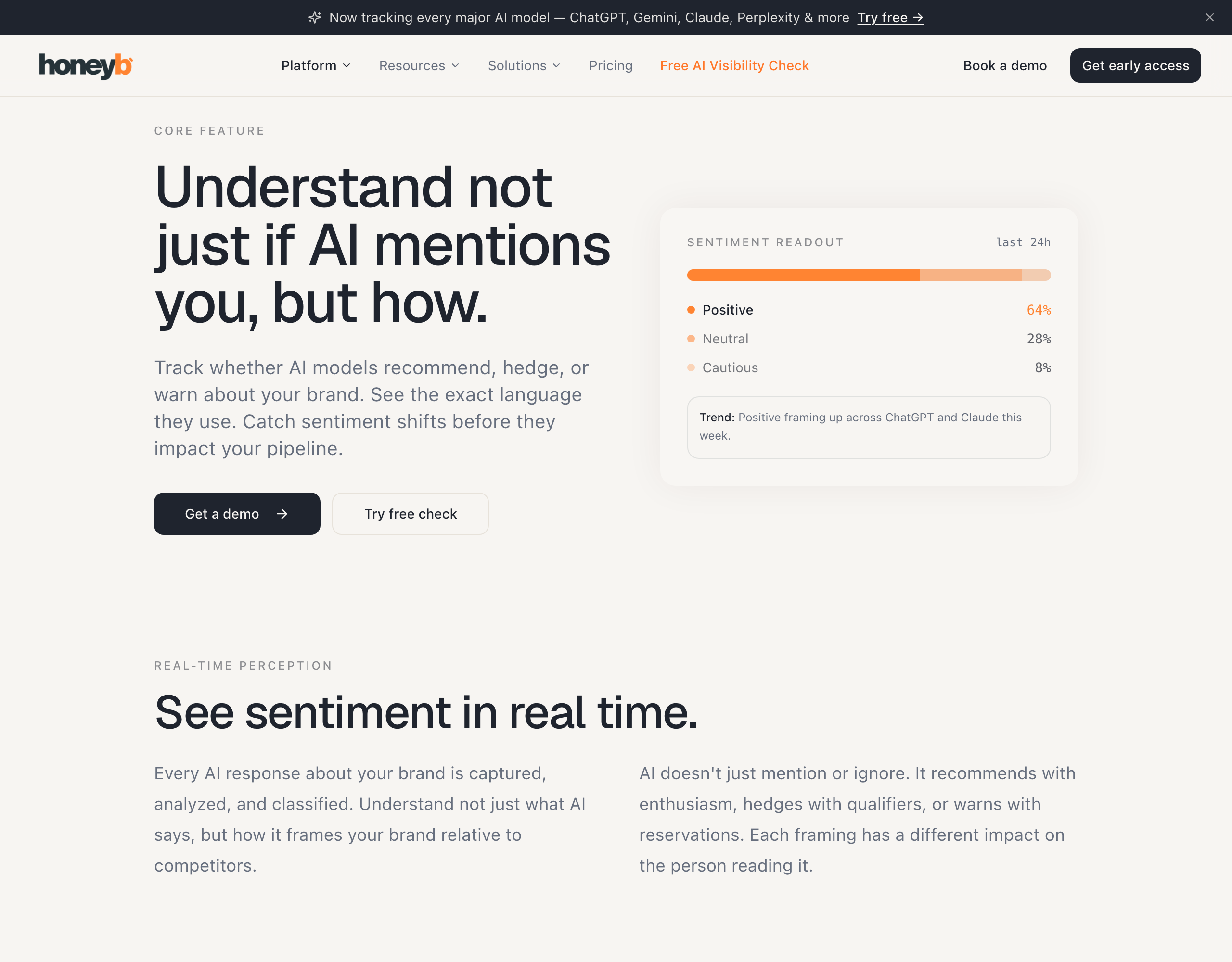
This is the job Honeyb is built for, and we should disclose that it is ours. Honeyb runs scheduled scans across the major AI engines rather than one-off spot checks, tracks how often your brand is mentioned and cited, measures share of voice (how often you are named versus rivals) and analyses sentiment so you can see whether the framing is positive, neutral or negative. The point is not that a suite cannot show you a number. It is that a volatile signal needs continuous tracking to become a trend you can act on, and a trend is what tells you whether last month's digital PR push actually changed how the models describe you.
Who Search Atlas is for, and who should look elsewhere
The decision comes down to which job dominates your time and budget, and whether you want automation applied for you or kept in your own hands.
- Choose Search Atlas if you genuinely want broad automation in one place, across research, content, technical fixes and ads, and you have the time to supervise it closely.
- Choose a focused SEO suite or content tool if your real bottleneck is a single discipline, research depth or content quality, and you prefer changes to stay in your own CMS. Our roundup of the best AI SEO tools maps those options by job.
- Choose a dedicated AI visibility monitor if the thing you most need to know is how AI answer engines mention, cite and describe your brand over time, measured on a schedule rather than sampled once.
If, having read the review, you want to see how Search Atlas stacks up against narrower tools organised by the job you are buying for, we did exactly that comparison in our guide to Search Atlas alternatives, which weighs research suites, content tools and dedicated monitors side by side. Many teams end up running two complementary tools rather than one that claims to do everything, and that pairing often costs less than a top all-in-one tier while giving clearer signal on each front.
The honest position is that no single platform leads every category at once. Search Atlas is a strong choice for buyers who want breadth and will manage the automation, and a weaker one for buyers who want a single job done cleanly or who care most about the AI answer layer. Decide which of those you are, then test the candidate against the job that actually matters. You can see where your brand stands in AI answers today with the free AI visibility checker, which shows how often the major engines mention you before you commit to any suite.