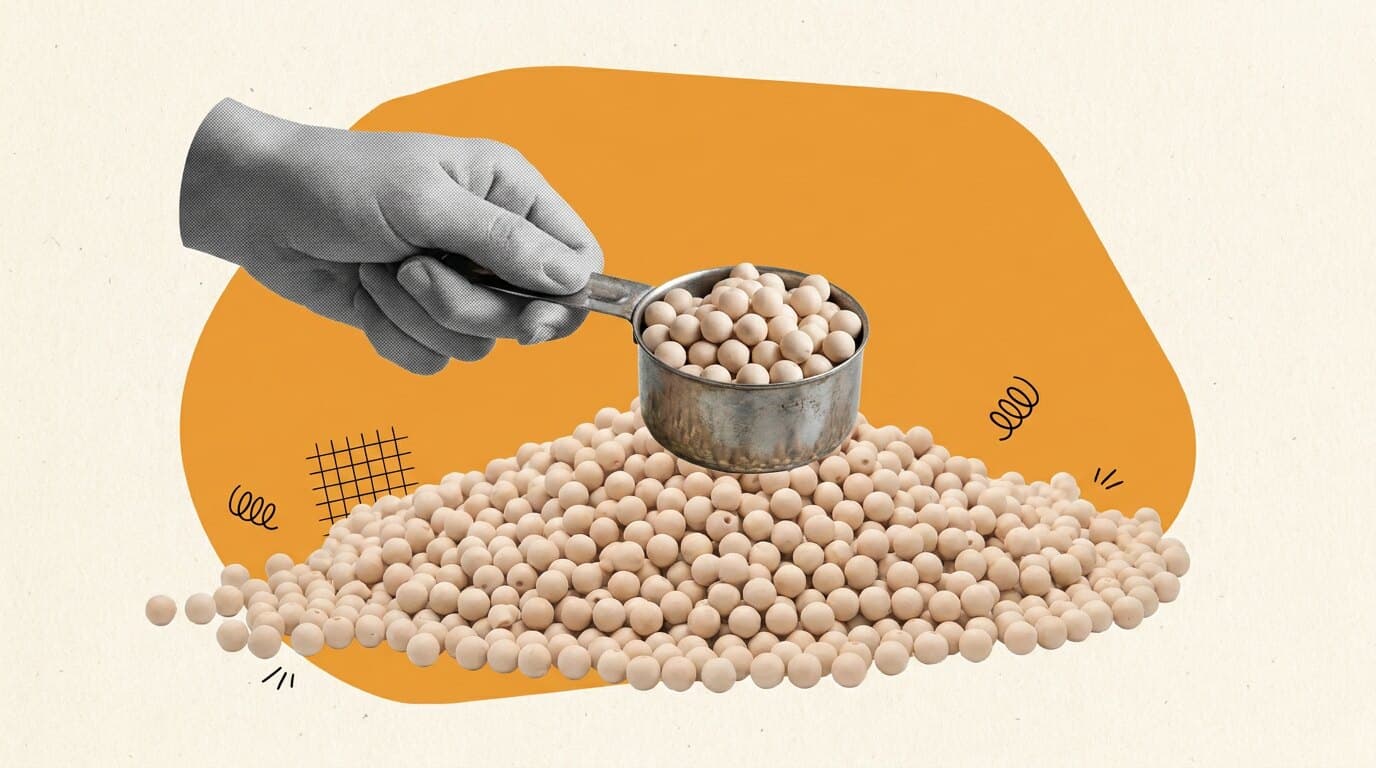
A visibility score is a comforting thing to open on a Monday morning. Semrush's AI Visibility Toolkit gives you one, a single figure for how often the AI engines name your brand against the competitors it picks for you, and it sits in the same dashboard where you already read your rankings and backlinks. The question this review asks is not whether that figure is convenient, because it plainly is, but whether it is true, and the honest answer is that it depends almost entirely on how the number was sampled. AI answers are not fixed: the same buyer question returns a different reply about 70% of the time, and in our own measurement across four engines the brand named first changed in between 28% and 44% of identical reruns. A score is therefore only as trustworthy as the number of samples behind it, which is the lens this review holds the toolkit to. The short verdict, before the evidence: for a team already living inside Semrush it is a reasonable, low-friction way to start watching the AI answer, but its 25-prompt entry sample and suite-wide focus make its headline number a directional read rather than the defensible figure a brand whose pipeline turns on AI answers should act on, and the gap is worth understanding before you buy.
What an AI visibility score has to survive to be trusted
~70%
of repeat questions return a different answer
A score from a thin sample measures noise as much as signal. SparkToro.
28% to 44%
of identical reruns change the number-one brand
Even first place moves between runs, so the score needs many samples. Honeyb, 13 July 2026.
25 prompts
feed the score in the $99 entry tier
The sample the headline number is built on before you buy more. Semrush, 2 Sep 2026.
What the toolkit actually tracks
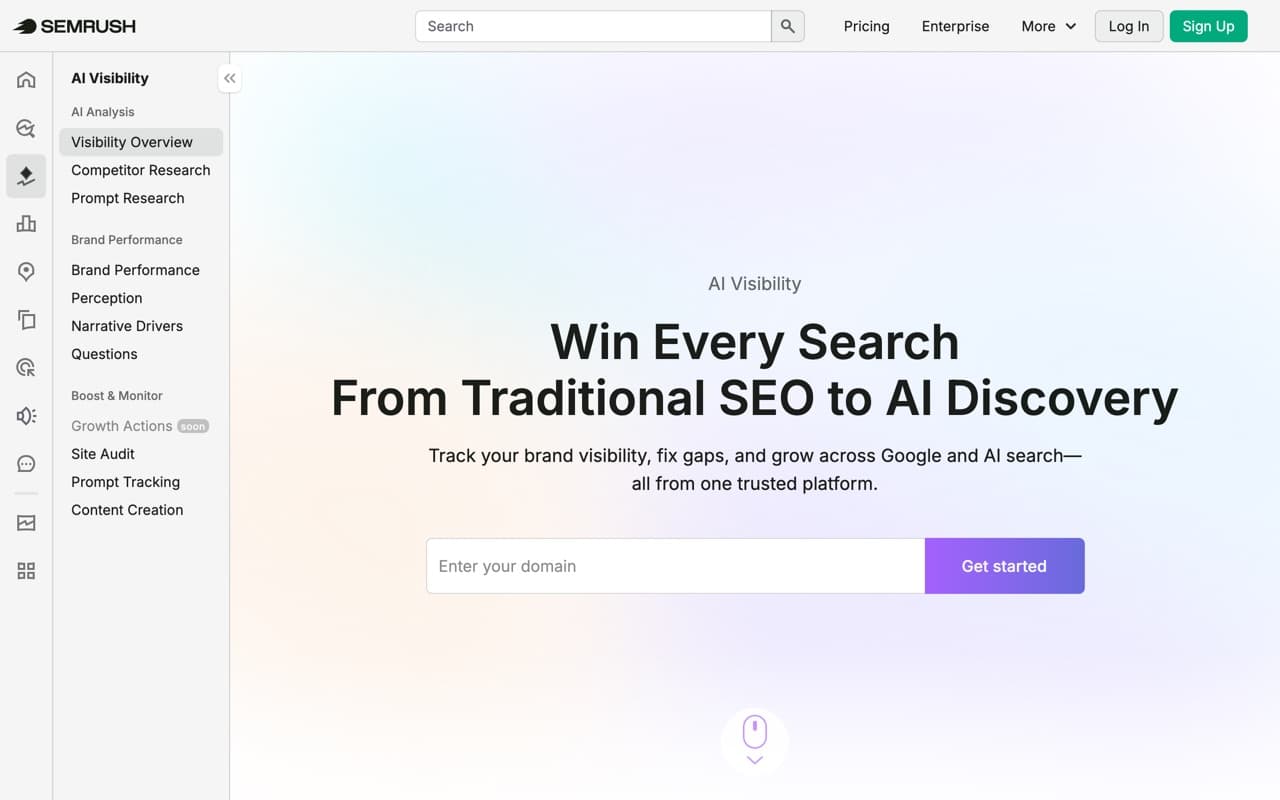
Semrush folds AI-answer monitoring into its suite as an add-on built around six reports, and the full detail of each is laid out in our longer explainer of the Semrush AI Visibility toolkit; this review is interested in the two that carry the verdict. The first is the AI Visibility Score itself, which Semrush defines as how often your brand is mentioned in AI answers relative to the median of the competitors it identifies for you, counting both linked citations and unlinked name-drops. That second choice is a good one, because a great deal of AI exposure is a mention with no clickable source attached, and a tool that only counted links would undercount you. The second report that matters is Prompt Tracking, which refreshes your chosen prompts daily. Both are genuinely useful, and the daily cadence is the toolkit's quiet strength: a score that updates every day is far better placed to catch a real move than one refreshed monthly. The catch sits upstream of cadence, in how many prompts feed the score in the first place.
The sample problem, in one number
On the standalone tier, verified on the Semrush AI Visibility pricing page on 2 September 2026, the toolkit tracks 25 custom prompts per domain at $99 a month and refreshes them daily. Twenty-five is a fair start for a narrow brand with a handful of buying questions, and a real constraint for anyone whose category gets asked about in dozens of different ways. The reason it matters is the volatility above it: if the top brand in an answer changes as often as 44% of the time between identical runs, then the accuracy of a share-of-voice figure rests on how widely and how often you sample the question space, not on how the dashboard looks. Our guide to judging AI visibility data by its sampling rather than its screenshots makes the general case; applied here it is plain arithmetic, because 25 prompts refreshed daily is a solid directional signal and a shaky basis for a precise number, and Semrush lets you buy more prompts precisely because more is better. The measured spread below is the thing any entry-tier score is sampling its way through.
Top-pick change rate
How often the top recommendation changes between identical runs
That is the honest way to read the entry score: as a gauge with a wide error bar, useful for spotting the direction of travel, not yet a metric to present to a board. Widen the sample before you treat it as one, which our study of whether ChatGPT gives everyone the same answer explains in more detail.
Where a dedicated monitor pulls ahead
The most concrete limit is engine coverage. As of 2 September 2026 the toolkit's own pricing page lists ChatGPT, Google's AI surfaces, Gemini and Perplexity, which covers most of where buyers now ask, with one notable absence: Claude, which a dedicated monitor such as our own free checker reads alongside the other three. Whether that gap matters is a question only your buyers can answer, and the honest instruction is to confirm the current engine list against where your customers actually ask rather than trust any marketing page, ours included.









Want to get recommended by AI?
Check your AI search visibility, then let the Honeyb agent write, fix, and earn what gets you recommended. Free to start.
The second difference is source intelligence. The toolkit tells you your score, your share of voice and the sentiment attached to your name, which is the measurement layer and a good one; a citation-tracing tool goes a step further and shows the exact page the engine read, which matters because 62% of AI citations never name the brand and 40.1% of all AI citations point to Reddit, the single most-cited source. The thread teaching the engine about you is often one no marketing team owns, so knowing your score without knowing its source tells you that you are losing without telling you where to go. Perplexity, which exposes its sources in the open, is where that tracing pays off most, a point our roundup of Perplexity monitoring tools takes up in full.
The third is scope, and it is shared across most of the category rather than a fault peculiar to Semrush. The toolkit measures your position and audits technical blockers such as AI-crawler restrictions; it does not write, earn or refresh the third-party mentions that actually move the answer. It tells you the weather, in other words, not how to change it. The table below sets the trade-offs side by side.
| What decides whether the score is trustworthy | Semrush AI Visibility Toolkit | A dedicated AI answer monitor |
|---|---|---|
| Engines read | ChatGPT, Google's AI surfaces, Gemini, Perplexity | Typically add Claude; breadth varies by tool |
| Entry prompt sample | 25 custom prompts, refreshed daily | Varies; the sample size sets the margin of error |
| What it counts | Linked citations and unlinked mentions, share of voice, sentiment | The same, and on some tools the exact page cited |
| Scope | One panel inside a broad SEO suite | The AI answer layer only |
| Starting point | Free 7-day trial and free checker, then $99/mo per domain | Ranges from free checks and $29/mo upward |
What it does better than a standalone tool
It would be a poor review that only listed limits. The toolkit's real advantage is that it is already where you are. For the large number of teams who open Semrush every morning for rankings, keywords and site audits, adding the AI answer as one more panel removes a login, a second invoice and the internal argument about buying yet another tool, and the shared competitor and prompt data across the suite genuinely reduces double work. The free AI Visibility Checker and a seven-day trial let you get a first reading before committing anything, and the daily refresh means the number you do get is at least fresh. For a mid-market brand that wants AI visibility as a tracked line inside a broader SEO practice, rather than as a discipline of its own, that consolidation is the strongest reason to choose it, and a fair one.
The verdict: who should buy it
So, is it worth it? The answer divides cleanly by how much of your pipeline turns on the AI answer. If AI recommendations are one of several channels you keep half an eye on, and you already pay for Semrush, the toolkit is an easy yes at $99 a month: it is convenient, it refreshes daily, and it counts the unlinked mentions that many tools quietly miss. If AI answers are increasingly where your buyers decide, and a wrong reading would cost you real pipeline, then the entry sample and the missing engine mean you should either buy up the prompt volume until the score steadies or run a dedicated monitor built only for the AI layer, and either way hold the number you present to the sampling standard rather than the dashboard. The toolkit is a credible, honest starting point. It is not, at its entry tier, a replacement for sampling the question space widely enough to trust the figure you are about to act on, and the wider field of AI visibility tools is worth weighing on exactly that basis.
The fastest way to see the difference for your own brand is to read the answer the engines actually give, per engine, rather than a single blended score. You can do that in a couple of minutes with Honeyb's free AI visibility checker, which is our own tool and runs across ChatGPT, Gemini, Claude and Perplexity. If the picture it returns looks volatile, that volatility is the point: it is exactly what any score, Semrush's or anyone else's, has to sample its way through to be worth trusting.